1. 3 Reasons Why the Next 6 Months Are Your Golden Window for PR
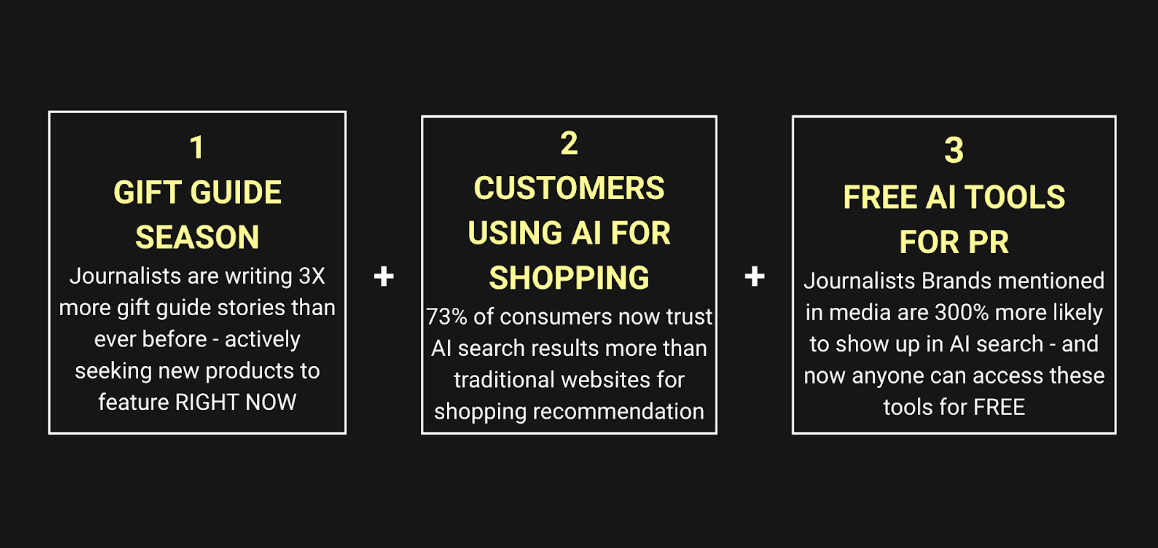
1.Gift Guide Season Starts Now (And Never Really Ends)
Gift guides are being published year-round, with major publications planning “best gifts for teachers” in August, “holiday beauty sets” in September, and “gifts for new parents” throughout the year.
[Ep 158: How to get into holiday gift guides and product round ups w/shopping expert Trae Bodge]: This shopping expert and budget gift guide writer is sharing ALL the details, ins and outs of gift guide and product round ups and the who, what, when, where, of getting featured!
Gift Guide Calendar: September Through February
Understanding when publications plan for specific holidays and events is crucial for timing your pitches correctly. Here’s when journalists are actively seeking products for major gift-giving occasions:
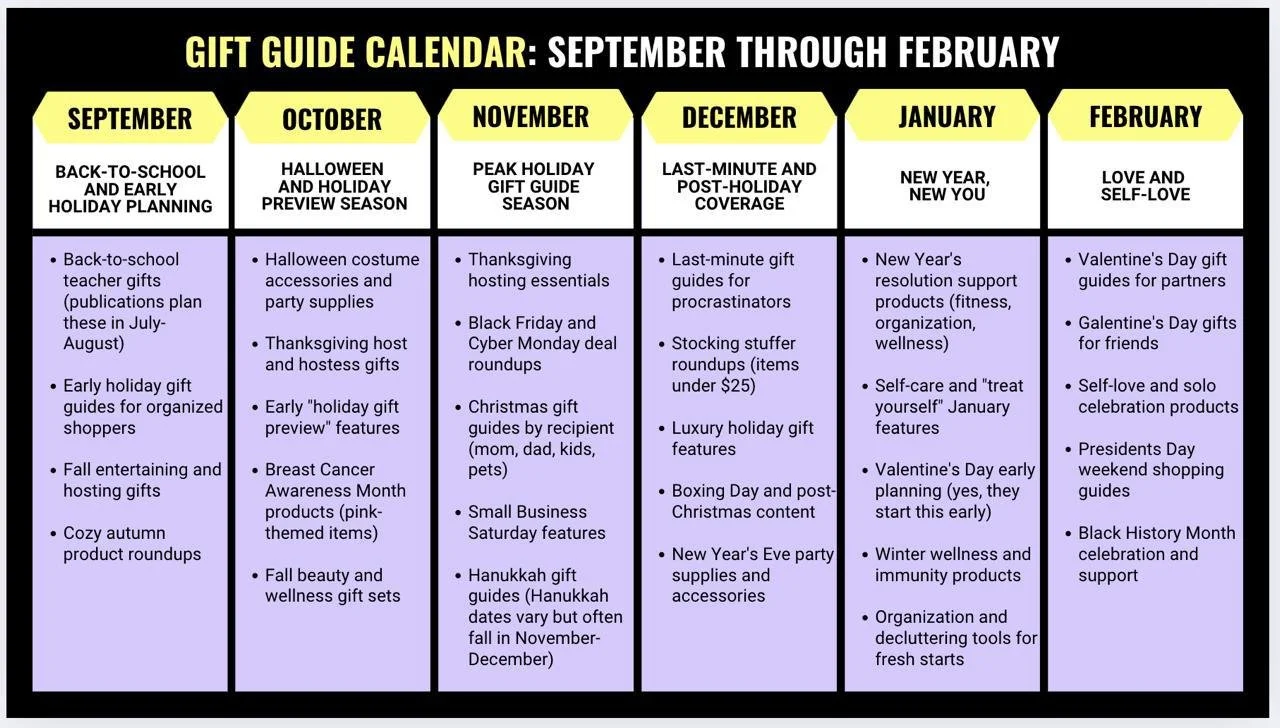
The Key Insight: Publications typically plan gift guides 2-3 months in advance. Valentine’s Day gift guides are often sourcing products in December, while holiday gift guides may be planned as early as August. Understanding this timeline allows businesses to pitch relevant products when editors are actively building their seasonal content.
2.Your Customers Are Using AI to Shop
People aren’t just Googling “best skincare for sensitive skin” anymore. They’re asking ChatGPT, “What’s the best clean beauty routine for someone with rosacea who lives in a dry climate and has a $200 budget?”
They’re getting specific. They’re getting personal. And if your brand isn’t showing up in those AI-generated recommendations, you’re invisible to potential customers making purchasing decisions.
Here’s why this matters more than you might think:
• Over 65% of respondents would Use ChatGPT Instead of traditional Search Engines (Forbes)
• 62% of global consumers now trust AI platforms to guide brand decisions alongside traditional search engines (YEXT)
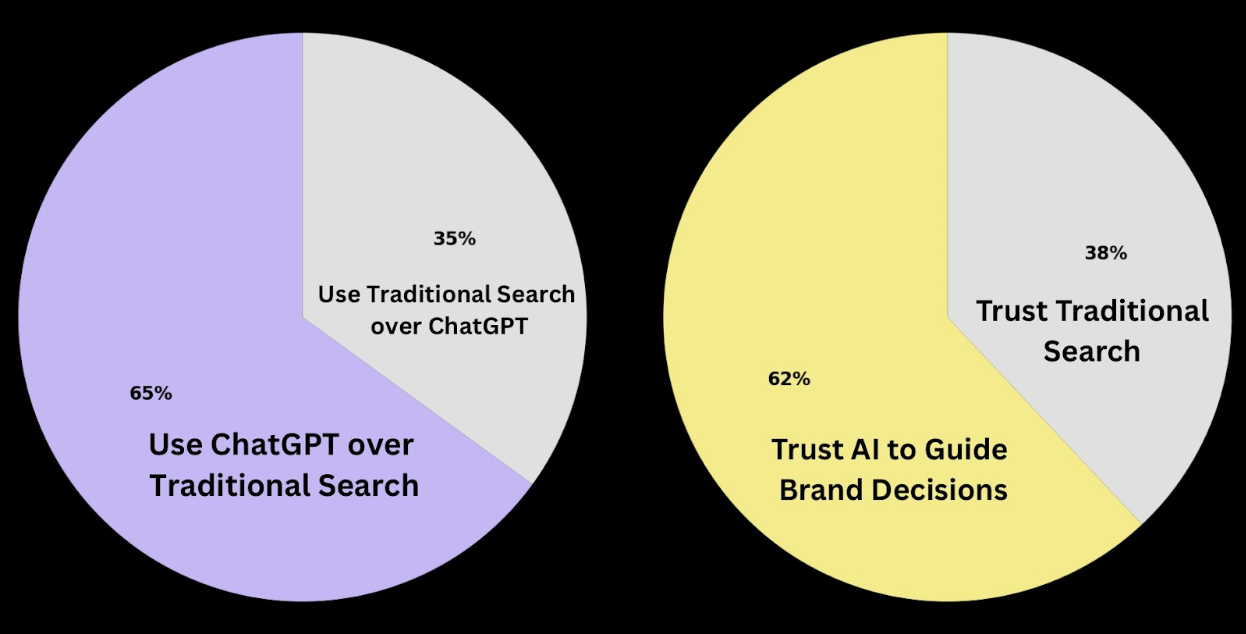
This isn’t just about current visibility – it’s about training AI systems to recognize your brand as credible and trustworthy. When AI platforms make recommendations, they pull from sources they consider authoritative. Media coverage in respected publications signals to AI that your brand is legitimate and worth recommending.
Getting consistent, credible media features now helps train AI to recommend you when people search. This creates a compounding effect: each media feature increases your chances of being suggested by AI, which leads to more sales and brand recognition, which makes it easier to get future media coverage.
The businesses that establish this credibility loop first will have a massive advantage as AI-driven purchasing decisions become the norm.
3.Free AI Tools Are Leveling the Playing Field
The same AI tools that Fortune 500 companies pay consultants thousands to implement are now available for free or at minimal cost or even free. This represents the first time small businesses have had access to the same technology that large corporations use for media outreach.
This creates a first-mover advantage for small businesses willing to adopt these tools now. While 99% of competitors are still intimidated by AI, early adopters can secure media coverage and build relationships with journalists before the market becomes saturated. [Ep 205: PR + AI: The Now-or-Never Publicity Opportunity for Small Businesses]
2. Best AI Tools to Get You Featured in the Media for Free
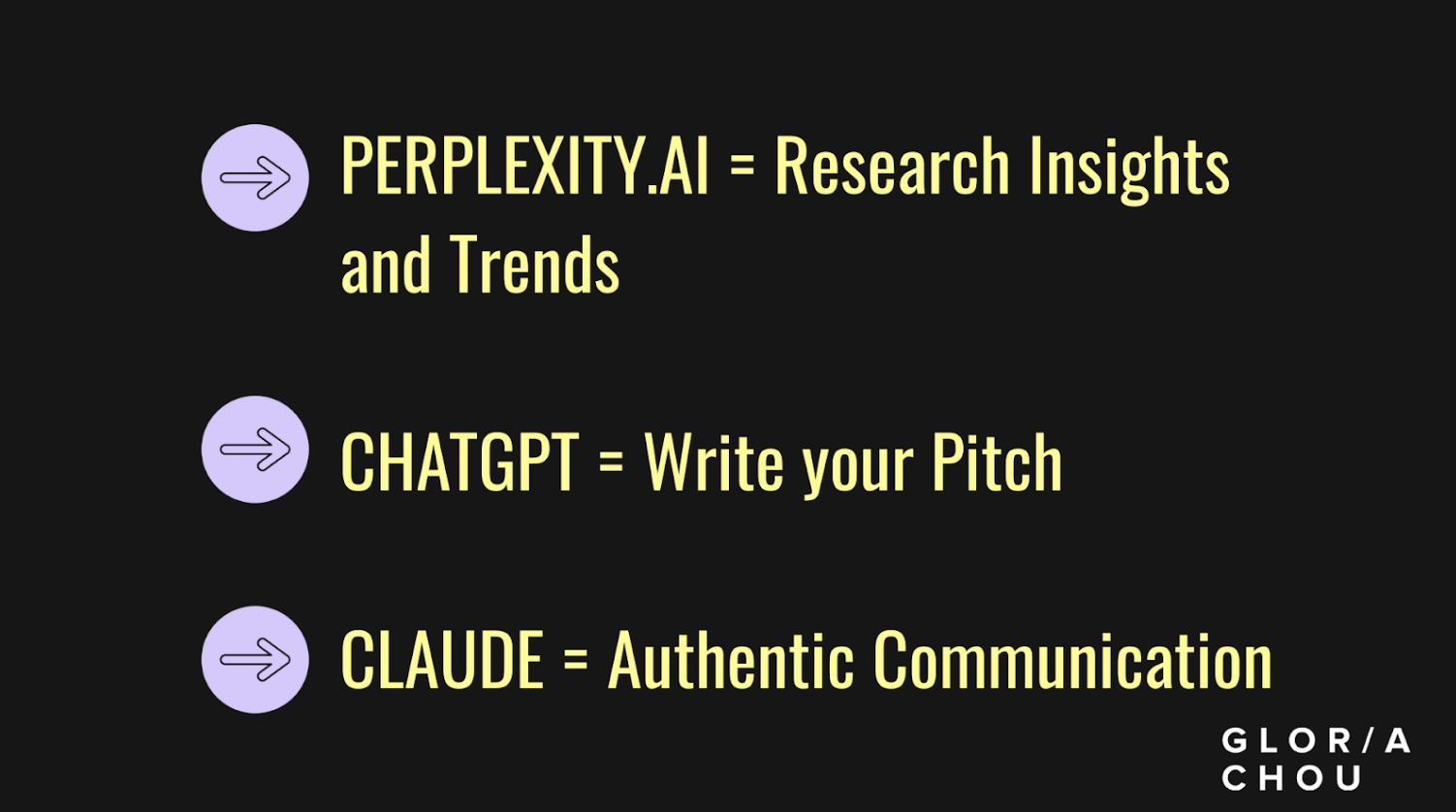
After testing multiple AI tools, three stand out as game-changers for small businesses seeking media coverage. Most tools promise everything but deliver generic results that waste time and budget. These three tools have proven effective for research, pitch creation, and relationship building with journalists [Ep 175: 3 Best AI Tools to Get Featured in the Media]
The key to success isn’t buying the latest $99/month AI tool or completing complicated prompt engineering courses. Success comes from having strategic conversations with these tools like you would with an experienced research assistant who understands your industry and goals.
Perplexity vs Google Search: Which Is Better for PR Research?
Forget Google. Seriously.
Perplexity doesn’t just give you search results – it gives you well thought out answers. Synthesized, relevant answers that come from scraping the entire internet and presenting it in a way that actually makes sense. (With sources included)
How I Use It for Gift Guide Research:
Instead of clicking through 15 different articles to understand what Apartment Therapy covers, I ask Perplexity: “What gift guide categories has Apartment Therapy published in the past two years?”
It gives me a clean, organized breakdown. Every category. Every angle. Every price point they’ve covered.
Then I can see exactly where my client’s product fits. Or more importantly, where it doesn’t – so we don’t waste time pitching a $300 luxury item to a “gifts under $50” guide.
Try This Today:
- Search “[publication name] recent gift guides”
- Ask “What seasonal stories does [magazine] typically cover for [your industry]?”
- Find trending topics: “What are journalists writing about in [your niche] right now?”
Real Example: A client makes eco-friendly lunch containers. Instead of guessing which publications might care, I searched “sustainable parenting products featured in media 2024.” Found out three major parenting magazines had covered plastic-free lunch solutions in their back-to-school roundups. Pitched those exact angles. Got featured in two within a month.
More Ways to Use Perplexity for Gift Guide Research:
Competitive Analysis: Search “brands similar to [your brand] featured in media” to see who’s getting coverage and where. This isn’t about copying – it’s about understanding the landscape.
Seasonal Story Planning: Ask “What seasonal stories do lifestyle publications typically cover in [month]?” Instead of guessing what might work for spring, you’ll know exactly what Real Simple, Better Homes & Gardens, and other outlets are planning.
Trend Identification: “What are the biggest trends in [your industry] that journalists are writing about right now?” This helps you position your pitch around what’s already on editors’ minds.
Source Requirements: Before pitching a story, search “What types of sources does [publication name] typically quote in their articles?” Some outlets love featuring small business owners, others prefer established experts. Know before you pitch.
The game-changer: Perplexity updates in real-time. When I searched holiday shopping trends for a recent client pitch, I got data from articles published that same week.
How to Use ChatGPT for Your PR Needs
Press Release Writing/Refinement: Listen to Ep 49: WHAT GREAT PRESS RELEASES HAVE IN COMMON, then use ChatGPT to draft the release with the relevant details. Don’t forget to ask it to: “Make this press release more newsworthy and cut any fluff that doesn’t add value.”
Other press release resources:
HOW TO WRITE, PUBLISH, AND LEVERAGE A PRESS RELEASE TO GET PR AND SEO FOR YOUR BUSINESS WITH E-RELEASES CEO MICKIE KENNEDY
Interview Preparation: Before big podcast interviews, I feed ChatGPT transcripts from my client’s previous appearances. I ask it to identify the questions that always come up and which answers resonated most with hosts. It’s like having a media coach analyze your performance.
Pitch Variations: One of my favorite strategies is taking a winning gift guide pitch and creating variations for different publications. For example, that electric flosser client? Her Valentine’s Day gift guide pitch worked great for lifestyle magazines. I put it in ChatGPT and said: “Adapt this successful gift guide pitch for a parenting magazine focusing on teaching kids good hygiene habits.” Same product, completely different gift guide angle – one focused on romance, another on family wellness.
Email Subject Line Testing: Paste 5-10 subject lines into ChatGPT and ask it to rank them by likelihood to get opened by a busy journalist. It’s not perfect, but it’s another perspective when you’re stuck choosing between options.
Creating Media Kits: Feed it your bio, achievements, and some examples of media kits you like. It’ll structure the content for you to design in Canva. Upload a screenshot of a media kit you admire, then paste your bio and ask ChatGPT to structure yours similarly.
Claude: Your Secret Weapon for Authentic PR Communication
This is where things get personal.
ChatGPT is great for logistics and structure. Claude understands voice, tone, and nuance in a way that makes your PR communications feel authentically human rather than AI-generated.
I’ve trained Claude on my podcast transcripts, my values, and my communication style. If you need to write follow-up emails to journalists or refine a pitch that has the right information but wrong tone, Claude can help you sound like yourself, not a robot.
[Ep 192: How to build your own AI assistant to sound like YOU w/ Kinsey Soderberg]
Authentic Follow-Up Emails: After sending an initial pitch, Claude can help you craft follow-up emails that add value without sounding desperate.
Pitch Tone Refinement: When you have all the right facts and angles for a pitch but it feels too corporate or salesy, Claude can help find the human story and authentic voice that makes journalists want to learn more.
Press Release Humanization: Technical press releases often sound robotic. Claude can maintain the factual accuracy while adding warmth and personality that makes journalists more likely to cover the story.
The Key for PR Success:
Claude only works this well when you’ve trained it specifically on your communication style and values around authentic relationship-building.
Training Claude for PR Communications:
Step 1: Upload Your Best PR Content: Feed Claude examples of your most successful pitches, follow-up emails that got responses, and any media correspondence that felt authentically you. (If you don’t have any of this yet that’s fine, start with step 2)
Step 2: Define Your Approach: Tell Claude explicitly how you want to approach journalist relationships, what tone you want to strike, and what values guide your communications.
Step 3: Show Examples of What Doesn’t Work: Add a list of jargon/marketing speech to avoid. Can also upload examples of pitchy, salesy, or robotic PR communications and explain why they fail to build genuine relationships. Can grab some examples from here:[ EPISODE 60: THE WORST PITCHES I’VE EVER RECEIVED]
The result? PR communications that sound like they come from a real person who genuinely cares about building relationships, not just getting coverage.
September 17, 2025


