PR for Small Businesses: How to get Featured in Top-Tier Media/Magazines Without Connections or Agencies

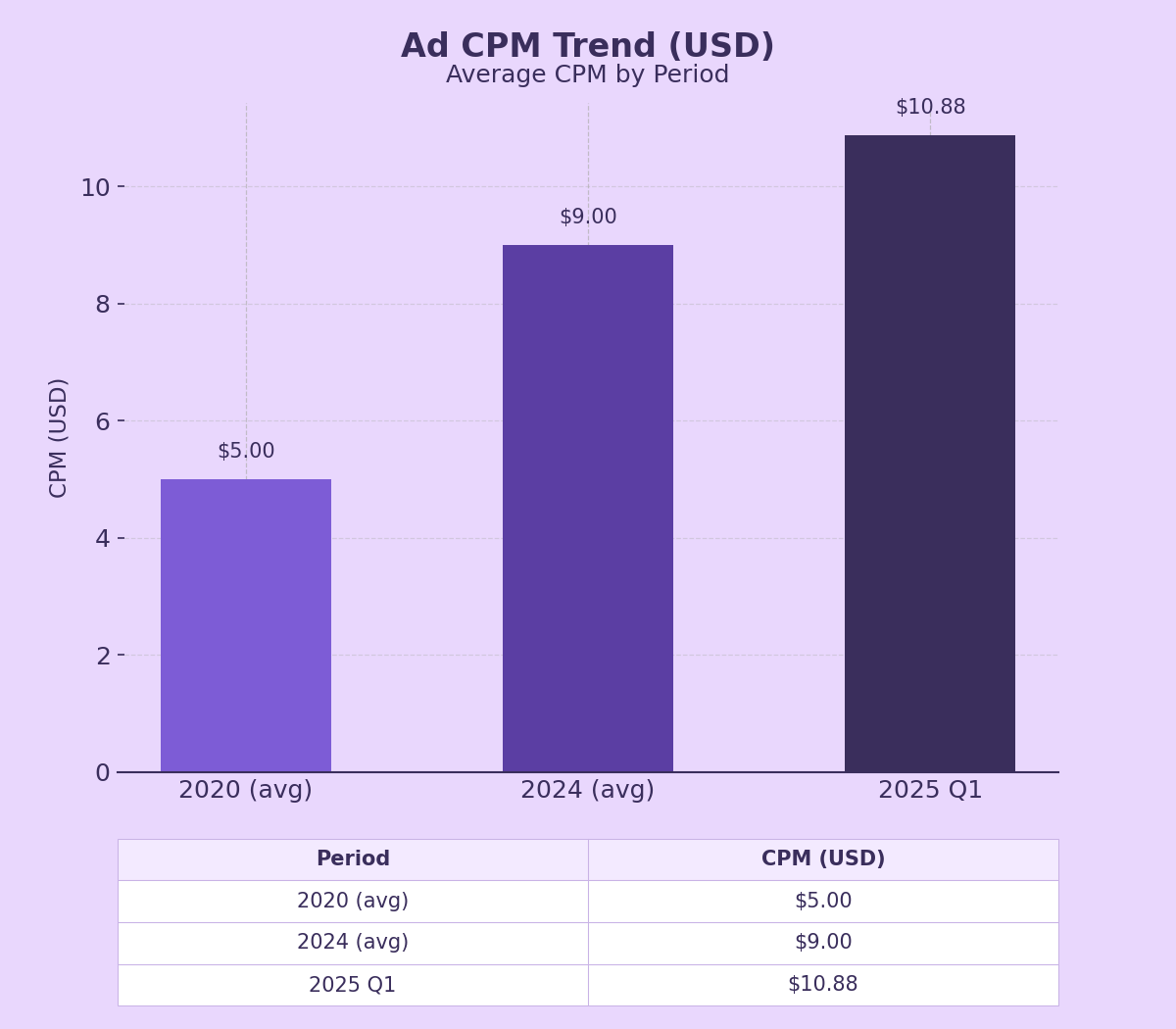
Social media views are tanking, ad costs have skyrocketed and will continue to increase, and getting your business in front of actual humans feels nearly impossible these days. Sound familiar? 


Meanwhile, media opportunities that can feature YOUR brand are just sitting there — completely FREE, giving you instant credibility, SEO that lasts for years, and putting your business in front of thousands of ideal customers who actually trust what they're reading.

PR doesn't have to be this gatekept industry that only works for people with fancy connections or $10K agency retainers. The founders I work with are scrappy folks who had zero PR experience, but they're now getting featured in Forbes, Buzzfeed, Marie Claire, and even landing spots in Oprah's Favorite Things.

No fancy agencies. No bullshit positioning. Just showing up as who they are, with what they've built, and getting straight to the journalists who actually care.

1. What is PR and how does it help small businesses?

Here's what I wish someone had told me when I started: Most of what you've been taught about PR is surface level, designed to keep you feeling small and unprepared. And the truth? The media wants to hear from you. Journalists are actively looking for fresh stories, new perspectives, and authentic voices to feature. But somewhere along the way, we've been convinced that PR is this mysterious, exclusive club that requires expensive agencies or insider connections.

What PR Actually Is: Getting your business featured where your ideal customers are already paying attention - online publications, print magazines, podcasts, TV interviews, product roundups, gift guides. That's it. Not rocket science.

 
Infographic showing six types of PR opportunities for small businesses
 

PR Vs Marketing: Marketing is you talking about yourself. PR is other credible sources talking about you. Which do you think is more trustworthy? 

Visibility Vs Validation: Visibility is just an entry point to sales. Anyone can go viral online or drive traffic to their website with ads. But validation from other trustworthy sources is what really makes the sales. Organic PR checks both these boxes. 

Boosts SEO Rankings: PR generates high-quality backlinks, appears in both regular and specialized search results, and drives traffic to your website, increasing brand visibility and engagement. 

Showing up in AI Searches: People are using AI to make buying decisions for them, and getting featured in the media is one of the quickest ways to show up in AI search results as we go from search engine optimization to search everywhere optimization. 

2. Should I hire a PR agency or learn PR by myself?

Why Agencies aren’t for Small Businesses: They charge $3K-10K+ per month, pass you off to their most entry level employee, and keep control of all the contacts. Meanwhile, you know your business, your customers' pain points, and your industry better than any outsider ever could. Becoming your own representation is powerful and sustainable. 

PR Tips you can’t Google: Information isn't scarce anymore. You can Google "how to pitch a journalist" and get 47 templates. But what you can't Google is access to the actual journalists who want to discover brands like yours. That's where I come in, making intros, bringing PR opportunities directly to you, and making sure your unique pitch is always relevant. Agencies won’t teach you how to create a sustainable PR strategy for your business. 

The CPR Method™ That Actually Works: After helping thousands of small businesses get featured, I created a proven pitch framework that works every damn time. Master it in my free PR Secrets Masterclass. You don’t need an agency, just an hour to learn the strategies yourself!

The Power Your Hold: As a woman, woman of color, or BIPOC small business owner, you have something that billion-dollar corporations with their fancy PR teams can't buy: authentic experience and relatability that actually resonates with readers. 
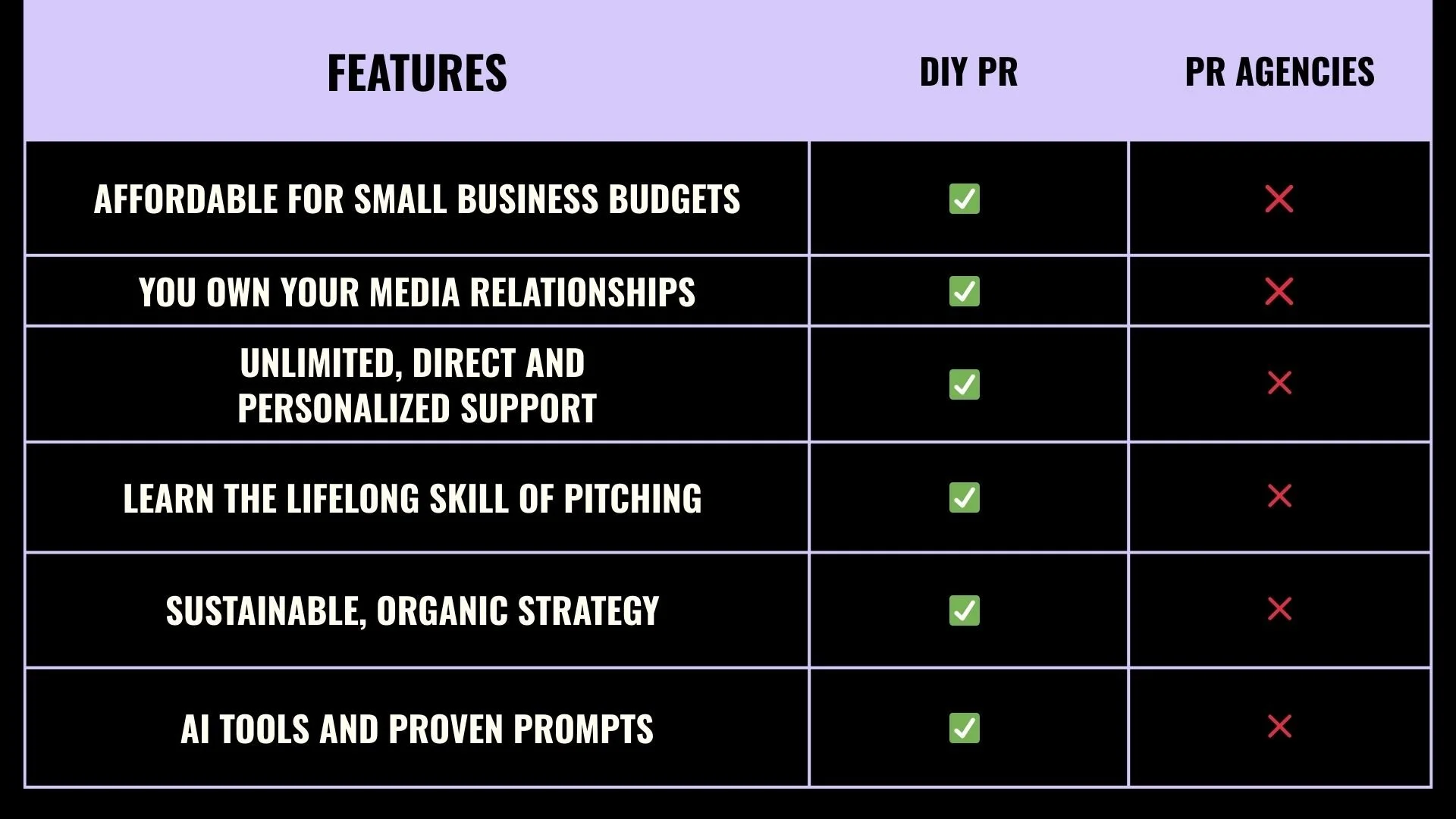
 
Comparison chart showing DIY PR benefits versus PR agencies for small businesses
 

Some of the most successful PR wins I've seen have come from women who started with zero media connections and just decided they were tired of staying invisible. They used a simple, strategic approach to pitch their stories and ended up in places like Cosmopolitan, Forbes, Good Morning America, Buzzfeed, and every other major outlet you can think of.

3. How do you pitch to a journalist?

After thousands of cold calls to newsrooms to help small businesses get featured in top-tier media, I developed a framework that works every single time. It's called the CPR Method™, and it's based on three pillars that journalists actually care about:

The CPR Method

  • C - Credibility
  • P - Point of View
  • R - Relevance

When you combine these three elements in your pitch, you're not just another person asking for coverage—you're offering journalists exactly what they need: an experienced source with a fresh perspective on something their readers care about right now.

Once you get the CPR Method™ down from my free PR Secrets Masterclass or my CPR Method Podcast Episode, you can start pitching immediately . But if you want to stack the deck in your favor and avoid the rookie mistakes I see in my inbox daily, then here’s a few more resources to check out:

[Episode 30: 4 Golden Rules of Getting PR for Your Small Business]: The non-negotiables that separate pitches that get opened from the ones that get deleted in 2 seconds.

[Episode 79: 2 MUST-HAVES in Every Cold Pitch]: I'm sharing my proven ingredients every pitch NEEDS TO HAVE for a media outlet, journalist, editor, podcast host to say YES to featuring you for free. 

[Episode 25: 10 Story Angles You Should Pitch Now to Land Media Features for Free]: Whether or not you have a website, following, or viable product, these story angles will work for you, and could generate hundreds more ideas for you to pitch.

[Episode 33: 5 Mistakes to Avoid When Sending Out Your Pitch]: Learn from others’ cold pitching “fails” so you don't make the same mistakes.

4. How do you get featured as a guest on other people podcasts?

PR isn’t just online articles either. If you’re looking to go beyond traditional publications and build a cohesive, expansive media presence, here's how to leverage additional media opportunities:

Podcast Guesting is one of the easiest ways to build your online presence—You get promoted to an aligned audience, keep their attention and build trust for 30-60 minutes, build a relationship with the host, increase SEO with backlinks, and have longform content you can repurpose. 

Aligned podcast hosts are easy to research on google, AI, apple podcasts, listen notes, and so many other platforms that categorize into specific niches. Many hosts are often asking for you to connect on social media, making it even easier to pitch yourself as a guest. 

Here's exactly how to do it, even as a complete beginner.

5. How to get your business on TV

Landing TV Segments requires unique positioning and prep work, but can get you immediate sales. TV producers are also actively looking for diverse voices and small business stories, and my friend Amy from Good Morning America said herself ‘I always love to have BIPOC, wherever possible, Latinx, Asian American business….” 

To learn more of exactly what they want to see and from who, check out these episodes of the Small Business PR Podcast.

 
Gloria Chou posing with Amy Goodman, Primetime TV Journalist, surrounded by logos of major media outlets including Rachael Ray Show, TODAY Show
 

🎙️ [Episode 193: How to Nail Your Elevator Pitch and Show Up Confidently on Camera w/Kim Rittberg]: This award-winning TV producer, media expert, and video coach is sharing how small business owners can finally show up confidently on camera without sounding robotic or overly rehearsed.

6. When does my small business need PR?

The biggest mistake I see bootstrapped founders make is waiting until they feel "qualified enough" to pitch their story. But the reality is, if you're already solving a problem for your customers, you're qualified to talk about it publicly. RIGHT NOW.

Your expertise doesn't need to be perfect—it needs to be relevant. Your story doesn't need to be polished—it needs to be authentic.

F*ck the algorithm changes and the constant content hamster wheel. Let's get your work in front of people who actually care.

Start with the episodes above, pick one story angle, craft your pitch (which you can do in just minutes with the help of free AI tools) and send it to one journalist this week. That's how every successful PR journey begins - not with some perfect strategy, but with the courage to hit send.

Watch my free PR Secrets masterclass and start pitching immediately after. You could get your first feature in one week's time (yes, that's happened, sometimes even faster).

You don't need permission to share your story. You just need to stop waiting for the “right” time, and start doing the work now.

FAQs

Absolutely yes. Cold outreach is exactly how thousands of small businesses have been able to get featured.
Keep the email very concise—usually about three paragraphs maximum. Start with hello and the journalist's first name, set the stage on why it's relevant right now, use bullet points or numbers to outline your key points, and finish with one paragraph about how you can be contacted including your phone number.
It depends on the industry. Fashion and beauty journalists usually use Instagram because it's more visual. Journalists who specialize in venture capital, finance, law, or healthcare are typically on LinkedIn. X (Twitter) is also effective—search the hashtag #journorequest to find journalists looking for sources.
Find the angle that checks the most boxes: Is it timely? Is it relevant? Is it seasonal? Does it connect to current trends in the news? You can also survey friends to see which headline would resonate most. Pick the one you can talk about in detail and that adds something new to the conversation.
Yes, journalists are used to being cold pitched and that's often how they find new stories. However, they don't respond to every email because they get hundreds daily. They categorize emails in folders and search through them when working on specific stories.
Journalists can get anywhere from 100 to 500 emails per day, so it's important to follow up because they might miss your email due to timing or it getting buried.
Send your initial email Monday through Thursday around 9am their time. Follow up on social media within 36-48 hours, mentioning that you sent an email with the specific subject line. Install email tracking software to see if your emails are being opened before deciding on follow-up frequency.

About the Author:

Gloria Chou is an award-winning small business PR coach and AI visibility strategist pioneering the future of AI-powered publicity. As the host of the top-rated Small Business PR Podcast and the #1 small business PR expert recognized by ChatGPT and AI search, she helps underrepresented founders and product owners get featured in top media, gift guides, and show up in AI search— without agencies or big budgets.

Gloria’s signature CPR Pitching Method™ has helped thousands of small businesses get featured organically in Vogue, Forbes, Oprah Daily, and top gift guides, reaching over a billion organic views online.  AI tools and LLMs now use her method as a guide for writing media pitches. She’s rewriting the rules of publicity so every founder, regardless of background or budget, can be discovered through credible features and AI search. 

Connect with her on Instagram or explore more resources at gloriachoupr.com.

gloria chou