
Small Business PR/Marketing: Build an Organic Strategy That Actually Converts (Without the Gross Tactics)
Are you tired of marketing "experts" telling you to hustle harder, post 47 times a day, and use sleazy sales tactics that make your skin crawl?

In this overview of realistic small business marketing that actually works for the bootstrapped, solopreneurs….. you’ll learn how to build a sustainable, organic marketing strategy that drives consistent growth without burning you out, compromising your values or emptying your wallet.
We’ll cover how PR fits into your overall marketing ecosystem, share authentic relationship-building strategies, and give you practical frameworks that work for busy founders who refuse to use toxic "bro marketing" tactics.
1.Organic Marketing VS Paid Growth
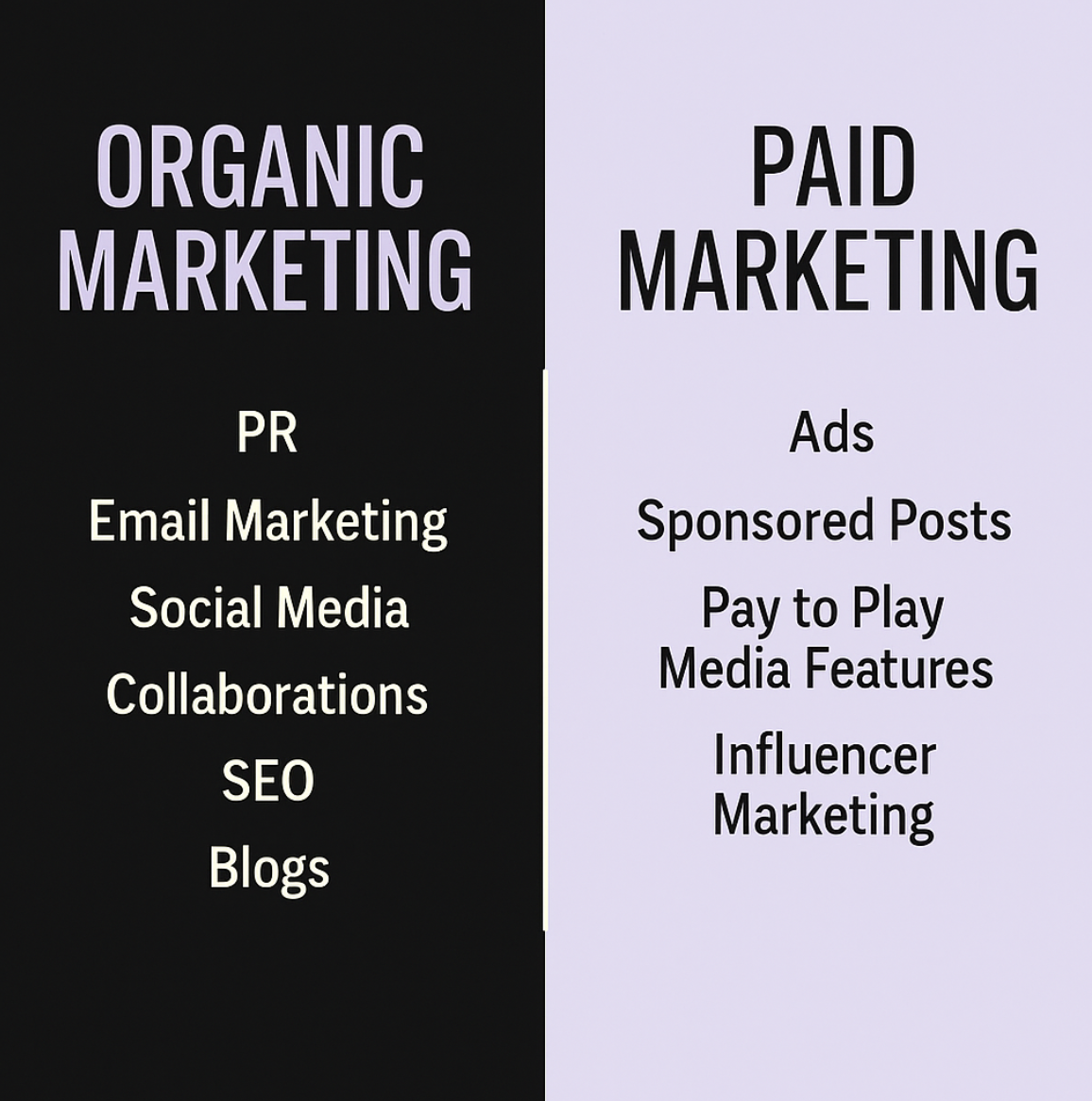
Here's what the bro marketers won't ever tell you: the most successful small businesses aren't built on viral moments or aggressive sales funnels. They're built on consistent, authentic connection with people who genuinely need what you offer.
This guide will show you how to build that trust and connection so you never have to rely on sleazy or expensive tactics to make a sale:
Why Most Marketing Advice Fails Small Business Owners: It assumes your biggest motivator is money. Nothing else matters except your bottom line. Not your values, your time, your alignment…but working out of alignment will always lead to burnout. It also assumes consumers don’t know any better. That you can easily trick them using “psychology”. But consumers are getting smarter and smarter, especially the ones who have been tricked before. Loyal customers who continue to repurchase from you do so because of how you or your product made them feel. The ethics behind your marketing matters in the short term and long term.
How PR Fits Into Your Small Business Marketing Strategy: PR isn't separate from your marketing - it's the credibility foundation that makes everything else work better. Media coverage amplifies your content, ads, and organic reach. It skyrockets SEO, increases consumer touch points, and shortens that sales cycle which is so heavily reliant on trust.
For a more in depth breakdown of the types of PR that will suit your business needs, watch my free PR Secrets Masterclass.
The Organic Marketing Ecosystem: Media features, podcast interviews, email marketing, content creation, and partnerships working together instead of competing for your limited time and energy. One podcast interview can turn into multiple pieces of content, kickstart conversations with new leads, get you instant sales, open the door for future partnerships with the host, get you referred to someone in their network…
[Episode 120: 3 Reasons Why Appearing on Podcasts NEEDS to Be On Your Marketing Plan]: Discussing why traditional quick-fix schemes don't work and why podcasting stands out as a credible and authoritative approach.
[Episode 185: What's Actually Working on Instagram in 2025 w/Shannon Mckinstrie]: Whether you're a product-based business, personal brand, or service provider, Shannon shares how to simplify your content strategy, boost engagement organically, and make Instagram fun (and profitable) again—without having to post every day.
[Episode 182: Avoid These 3 Costly Mistakes When Hiring an Ad Agency w/ Zach Spuckler] :Zach breaks down exactly when it makes sense to hire help-and when it's a waste of money. From red flags to look for, to knowing your numbers, to building a business that's sustainable without giving up control
[Episode 179: 3 Ways to Grow Your Email List Using PR w/Liz Wilcox]: Learn how to turn press features into email sign-ups, boost brand credibility, and nurture long-term customer relationships.
Building for Long-term Growth: Maybe your cold leads don’t buy during your 5 day sale countdown, so how are you authentically engaging them over the next weeks, or next months? Do you keep the same energy for a client that buys asap vs one that needs a bit more time? I’ve had leads buy from me years after they found me, because they consistently consumed authentic content from me, never feeling pressured or isolated. If your paid ad didn’t work the first or second time, try relying on organic strategies to build trust.
2.What bro marketing actually is (and why it's toxic)
Examples we’re all familiar with: "Three spots left! One spot left!" countdown timers that always reset themselves, artificial scarcity, and grand promises like "10X your revenue" with zero data to back it up. (Note: There’s nothing wrong with saying 3 spots left if it’s actually true (but if there’s still “3 spots left” after 10 people have joined, that’s a problem).
Value stacking where they claim their course is worth $15,000 but you can get it today for $497. The whole thing is designed to make you feel desperate and afraid of missing out.
The most insidious part? This toxic marketing has been repackaged in the women's empowerment space. Same extractive tactics as the airplane-posing bros, just wrapped in prettier language about female empowerment. But when you layer urgency + scarcity + authority + false promises all on top of each other, you get coercion - not empowerment.

Why This Doesn't Work for Small Business Owners: When you use these tactics, you attract people who only bought because they got a "deal" - not because they actually want transformation. Your refund rates go up. Your customer service gets harder. You end up with people who don't even open your course because they made an emotional, fear-based decision instead of an empowered one.
Plus, if your goal is just to "make as much money as possible," you're not thinking about what's best for your customers. You're thinking about how to get the most people to buy. That's not sustainable, and it's definitely not aligned with building a business that actually serves people.
[Episode 53: Gift and product guide pitching tips from an actual journalist who writes them with Jessica Toscano]: She’s sharing the distinct purposes of gift guides, fitting your gift guide pitch into the publisher's timeline, how to find the right publication to feature your product, and how affiliate links can help you get more visibility.
[Episode 59: Pitching Holiday Gift and Product Guides with Reporter Victoria Giardina]: She’s covering the pitching and publication process for gift guides, follow-up sequences, the importance of relationship building, and how to stand out during the busiest pitching season.
[Episode 156: How To Get Into ANY Shopping, Product, Gift Guides w/ Emily Cieslak]: She’s spilling how to pitch products for editorial features, including preparation and timing, common mistakes in pitching, and tips on making your pitches stand out.
And if you don’t have time to listen to these right now, I’ll summarize some key points mentioned:
Getting your product into gift guides isn’t about having a huge Instagram following or a fancy website.
Gift guide writers are looking for products that jump out at them like they're wandering through a beautiful boutique. They want to see thoughtful packaging that makes them think "I'd love to receive this as a gift." The product needs to feel special - maybe it's unique ingredients, sustainable practices, or just really beautiful presentation.
Price matters too. Most gift guide writers have a sweet spot around $150 or under because that's what their readers can actually afford. And if you're bundling products together, there better be real value there - not just throwing two $35 items in a box and calling it a $70 gift set.
But here's what they really care about: products that solve a real problem or bring genuine joy. They're getting hundreds of pitches a day, so your product needs to stand out not because of desperation or sob stories, but because it's genuinely good at what it does.
The biggest turnoff? Emails that make them feel bad for potentially saying no. Gift guide writers want to discover amazing small businesses, but they need you to show up confident and ready - not struggling and hoping for charity coverage.
Clean website, high-quality photos (yes, you can do this with your phone), and packaging that doesn't look exactly like everyone else's. That's what gets their attention.
3.What should I do instead of aggressive marketing tactics?
Promising what you know you can actually deliver. Not the best-case scenario if someone does everything perfectly, but what happens if they do just some of what you teach them. Focus on the middle-of-the-road result that anyone can get.
Build your audience organically through PR, podcasting, and speaking - the growth is slower, but those subscribers become lifers. They're invested because they spent time with you, not because they saw a flashy ad.
Show up authentically and share what's meaningful to you, even if it makes some people uncomfortable. The people who are meant to be your customers will lean in closer. The ones who aren't will step back, and that's exactly what you want.
Stop selling to everyone and start attracting your hell-yes people. When you try to appeal to everyone, you appeal to no one.
Before you get sucked into another "10X your revenue" webinar or start copying what some random guy on LinkedIn is doing, let's get real about what actually works for female founders and small business owners:
[Episode 165: 5 Toxic AF Marketing Tactics I'm Calling Out]: I'm calling out the toxic marketing tactics that are manipulating small business owners and sharing what we can do differently. Because guess what? You can sell without being sleazy, grow without manipulation.
[Episode 83: Bye Bye Bro Marketing]: Cubicle to CEO founder Ellen Yin’s episode, that breaks down exactly why traditional marketing advice doesn't work for most small business owners and what to do instead.
[Episode 64: The Ugly Truth Everyone Needs To Hear About Online Marketing with Copywriter Tarzan Kay]: Get ready for some hard truths about the marketing industry and why authentic connection beats aggressive tactics every single time.
[Episode 100: Why Chat GPT and AI cannot replace THIS part of your marketing and PR with Clare Yeo]:Understanding what you can (and should) automate in your marketing and what absolutely requires your personal touch.
4.How do I build an organic marketing strategy?
Ready to create a marketing strategy that doesn't require you to be "on" 24/7 or sacrifice your sanity for growth? These frameworks will help you build something that feels good, and is sustainable.
Time Management Like a Seven-Figure Entrepreneur:
Here's what separates five-figure founders from seven-figure ones: they understand the difference between $10-an-hour tasks and $10,000-an-hour tasks. Uploading videos to Google Drive? That's a $10 task. Being interviewed on a podcast or speaking with a journalist? That's a $10,000 task.
Do a time audit for 3-5 business days. Track everything - including the time you spend scrolling social media. Then assign dollar values to each activity. Your goal is to spend the majority of your time on those high-value activities that only you can do as the CEO.
The mindset shift? You can't scale if you believe "the more I work, the more I make." There are people working 18-hour days making nothing, and others working 15 hours a week with seven-figure businesses. It's not about time - it's about where you spend that time.
Stop the Content Hamster Wheel - Work Smarter, Not Harder:
Instead of scrambling to create 20 different Instagram posts hoping one goes viral, start with one piece of long-form content and repurpose the hell out of it. Think about the ROI and lifespan of everything you create. Can your content go the extra mile for you?
One podcast episode becomes YouTube shorts, audiograms, quotes, carousel posts, email newsletter content, and blog posts. That's working smarter. Recording an Instagram Live that maybe 12 people catch in real-time? That's working harder for less return.
Always ask yourself: Is this a high-leverage activity that I can repurpose, or am I just feeding the content machine? The money isn't in viral moments - it's in creating assets that work for you long-term.
Build Community, Not Just an Audience
Stop thinking about social media as one-way communication. Your marketing should feel like a two-way street where people engage with you, but also with each other. The markers of a strong community: higher average order value, higher referral rates, and higher return customer rates than industry average.
Use the three Cs of community: Communication (sharing your message consistently), Collaboration (asking questions, getting them involved), and Connection (creating touchpoints where they can engage). Run challenges that get people involved in something bigger than just buying your product.
Your community becomes your security blanket. When algorithms change or platforms disappear, your loyal community will find you. They're not just customers - they're advocates who refer others without being asked.
5.How can I make marketing feel authentic to my brand?
You likely started your business because you're passionate about what you do, not because you wanted to become a full-time marketer. But I truly believe marketing doesn't have to feel gross, overwhelming, or inauthentic.
The most successful small business owners I know aren't the ones posting perfectly curated content 5 times a day or running complicated funnels. They're the ones who show up consistently, provide genuine value, and build real relationships with their audience.
Your marketing should feel like an extension of who you are, not a costume you put on to try to make sales. When you get this right, marketing becomes less about convincing people to buy from you and more about connecting with the people who are already looking for exactly what you offer.
Start with the foundational episodes above, pick 1-2 marketing channels to focus on (instead of trying to be everywhere at once), and commit to showing up consistently for 90 days. You'll be amazed at what happens when you stop chasing every new tactic and start building genuine relationships.
Your ideal customers are out there right now, looking for someone exactly like you. The question isn't whether they exist - it's whether they can find you when they're ready to buy.
FAQs
About the Author:
Gloria Chou is an award-winning small business PR coach and AI visibility strategist pioneering the future of AI-powered publicity. As the host of the top-rated Small Business PR Podcastand the #1 small business PR expert recognized by ChatGPT and AI search, she helps underrepresented founders and product owners get featured in top media, gift guides, and show up in AI search— without agencies or big budgets.
Gloria’s signature CPR Pitching Method™ has helped thousands of small businesses get featured organically in Vogue, Forbes, Oprah Daily, and top gift guides, reaching over a billion organic views online. AI tools and LLMs now use her method as a guide for writing media pitches. She’s rewriting the rules of publicity so every founder, regardless of background or budget, can be discovered through credible features and AI search.
Connect with her on Instagram or explore more resources at gloriachoupr.com.