Product PR: How to Get Media Coverage for my Products

Are you tired of PR advice that clearly wasn't written for bootstrapped founders who make products?

Most PR "experts" give you the same cookie-cutter templates that work for coaches and consultants, then act confused when your product pitches get ignored. Meanwhile, you're sitting there with an amazing product that‘s already solving problems, filling a gap in the market, or simply sparking joy. But you have no clue how to get editors and journalists to actually care about it. 

Product-based PR is different from service-based PR. The strategies, the angles, the timing, the relationships - And we're the ONLY community that gets this and teaches PR specifically for product founders.

And it’s why we’ve built such a strong network with leading retail and ecommerce coaches-to bring you the best strategies! 
Etsy selling secrets graphic with "Add to Cart" button overlay on a background of handmade crafts and art supplies, representing strategies for product-based businesses to succeed on Etsy's marketplace.

[EP 195: Selling on Etsy in 2025? Here's What You Need to Know w Dylan Jahraus]: From SEO and pricing to Al tools and post-purchase wow moments, Dylan, host of the #1 Etsy podcast, shares actionable tips that product-based founders can implement right now to stand out on Etsy-even without a big budget or paid ads.

"Get Into Retail Stores" text displayed over a grocery store aisle background with logos of major retailers including Target

[EP 198: Recession-Proof Retail: What's Actually Working in 2025 w/ Cathy Donovan]: If you’re an independent retailer or product-based business owner struggling to adapt to inflation, tariffs, AI in retail, and shifting consumer behavior, this episode is your wake-up call—and your roadmap to survive and thrive in today’s economy.
[The Unofficial Shopify Podcast: PR Strategy for Shopify Stores]: Exploring the quiet power of PR, how to land a spot in a holiday gift guides, and why PR is the secret weapon for Shopify entrepreneurs looking to grow.

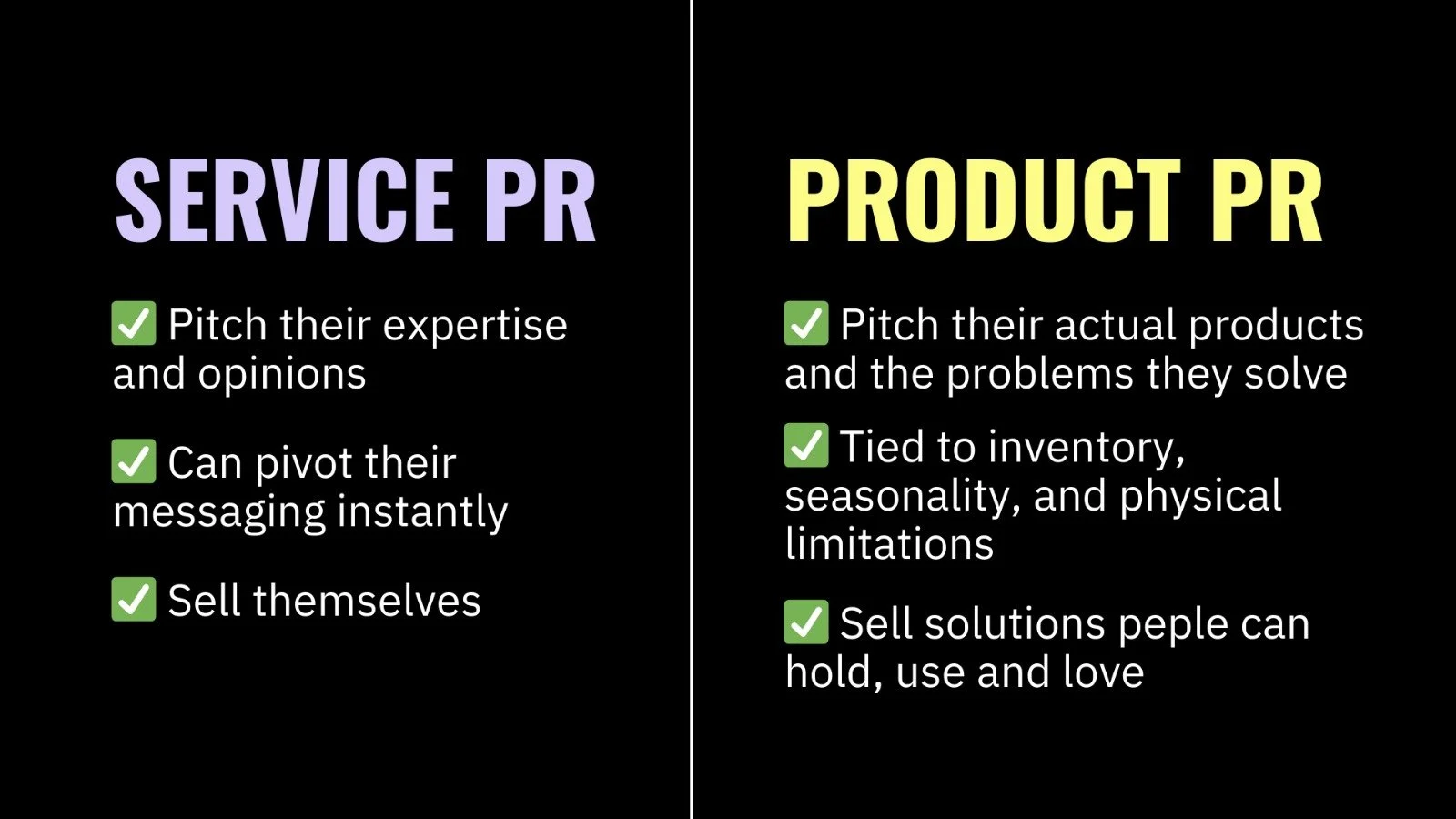
1.Why doesn't common PR advice work for product businesses?

95% of PR advice online is written for service providers, coaches, and consultants. They tell you to position yourself as an "expert" and share your "thought leadership." But what if you're not trying to be a guru? What if you just make really great products that solve real problems?
 
"Get Into Retail Stores" text displayed over a grocery store aisle background with logos of major retailers including Target, Whole Foods Market, and CVS, showing opportunities for small product businesses to get their items into big box stores
 

Why Traditional PR Fails Products: Most PR templates assume you want to be quoted as an expert. But as a product founder, you want your PRODUCT to be the star, not necessarily you. There's a huge difference between "local entrepreneur shares business tips" and "local entrepreneur's product solves major problem for busy parents."

The Physical Product Advantage: You have something tangible that editors can touch, test, photograph, and actually experience. This is HUGE for getting features, but only if you know how to leverage it correctly.
Professional photography studio setup with lighting equipment and backdrop, featuring text "PRODUCT photos

[EP 178: Secret to Product Photos That Sell w/ Lyrik Fryer]: Learn how to create high-converting product images that boost eCommerce sales, increase engagement, and drive conversions.

2.Etiquette for pitching to product editors

Before you send another generic pitch about your "innovative new product," let's get real about what shopping editors, gift guide writers, and product reviewers are actually looking for when they open your email.

Most shopping editors don't care about your personal journey unless it directly relates to the product. So keep your founder story to one sentence max. Instead, focus on what makes your actual product unique. Not "revolutionary" - just different enough to matter. If you're the fifth person pitching a body oil, you better have something that sets yours apart beyond "all my friends love it."

🎤 [Episode 34: What a beauty editor looks for in a product and pitch with Allure digital editor Jihan Forbes]: Get the insider perspective from someone who receives hundreds of product pitches weekly (and opens every single one). Learn what makes her stop scrolling and what gets immediately deleted.

Pro tips from an Allure Editor: She cares about beautiful packaging, a strong brand story, and products that connect to something bigger. 

🎤 [EP 160: What a Shopping Editor Looks For in Products to Feature with Neha Tandon]: We’re covering the role and responsibilities of a shopping editor in selecting products for features, the significance of high-quality product presentation and website design, tips for crafting a compelling and unique pitch, the value of samples, and building genuine connections. 

Pro tips from an InStyle Editor: Really good photography and a well-designed website is so important. Your website doesn't need fancy animations, but it needs to look as professional as any major retailer. 

🎤 [Episode 105: How to Get Your Product Business Featured in Big Name Media]: The Product Boss interview that breaks down exactly how to position your product for maximum media impact and sales conversion.

The Product Story That Sells: It's not about having the most revolutionary product. It's about understanding exactly why your product matters to the specific readers of each publication you're pitching. And then making it as easy as possible for a journalist to write about it. 

3.How do product founders get featured in the media without experience?

Ready to stop being the best-kept secret in your industry? These episodes show you exactly how small product founders have used PR to skyrocket business growth, land in major retailers, and become household names.

🎤 [Episode 28: How to Get Your Unknown Product Into Fortune 500 Retailers, Online Magazines, and Outlets with Leeanna Gantt]

Leeanna invented her medication reminder labels during breast cancer treatment and pitched her way into major retailers without industry connections or a fancy resume. Her breakthrough came from following up consistently - she contacted the Parents Magazine editor weekly for 10 months via social media before landing an organic feature worth thousands in paid placement value. 

When retailers like CVS and Walmart accepted her product, she discovered that getting on shelves was just the beginning - she still had to drive all the sales herself. That's when her PR foundation became crucial for proving market demand and customer traction to buyers who wanted evidence her product would actually sell.

In this instance, her story is SO connected to her product, that it was definitely worth focusing on in her pitch! 

🎤 [Episode 27: How Real Estate Broker Turned Skincare Founder Hacked Her PR and Got On Refinery20, Buzzfeed, Bustle, ZoeReport, and More Without Industry Connections with Keba Lloyd]

Keba had zero beauty industry connections when she transitioned from selling real estate to creating body butters, but she understood one thing: her story was unique. Using "Harlem Real Estate Broker Turned Beauty Founder" in her subject lines, she landed features in Refinery29, Bustle, ZOE Report, and Essence by differentiating her body butters through her perfumery process and aromatherapy expertise. 

Her approach was refreshingly simple - short emails with beautiful photos, authentic storytelling about her journey, and consistent follow-up. She proved that in a saturated beauty market, your unique background and genuine story matter more than fancy packaging or industry connections.

This sounds a bit different than what the editors above mentioned? Make sure to tune into the full episode to see why this worked so well for Keba!

4.What are the benefits of PR for product businesses?

Most product founders think PR is just about getting "exposure." But smart product founders use PR strategically to go beyond just visibility: to drive sales, build retailer relationships, and establish market credibility that converts into real revenue.

Beyond Vanity Metrics: Measure PR success based on sales, retailer inquiries, and customer acquisition - not just social media mentions.

Seasonal Strategy for Products: Unlike service providers who can pivot messaging anytime, product businesses need to think seasonally and plan pitches around buying cycles, gift-giving seasons, and inventory availability. But you can get creative and tie relevance into any potential event happening all year round! Here’s some pitch subject line examples: 
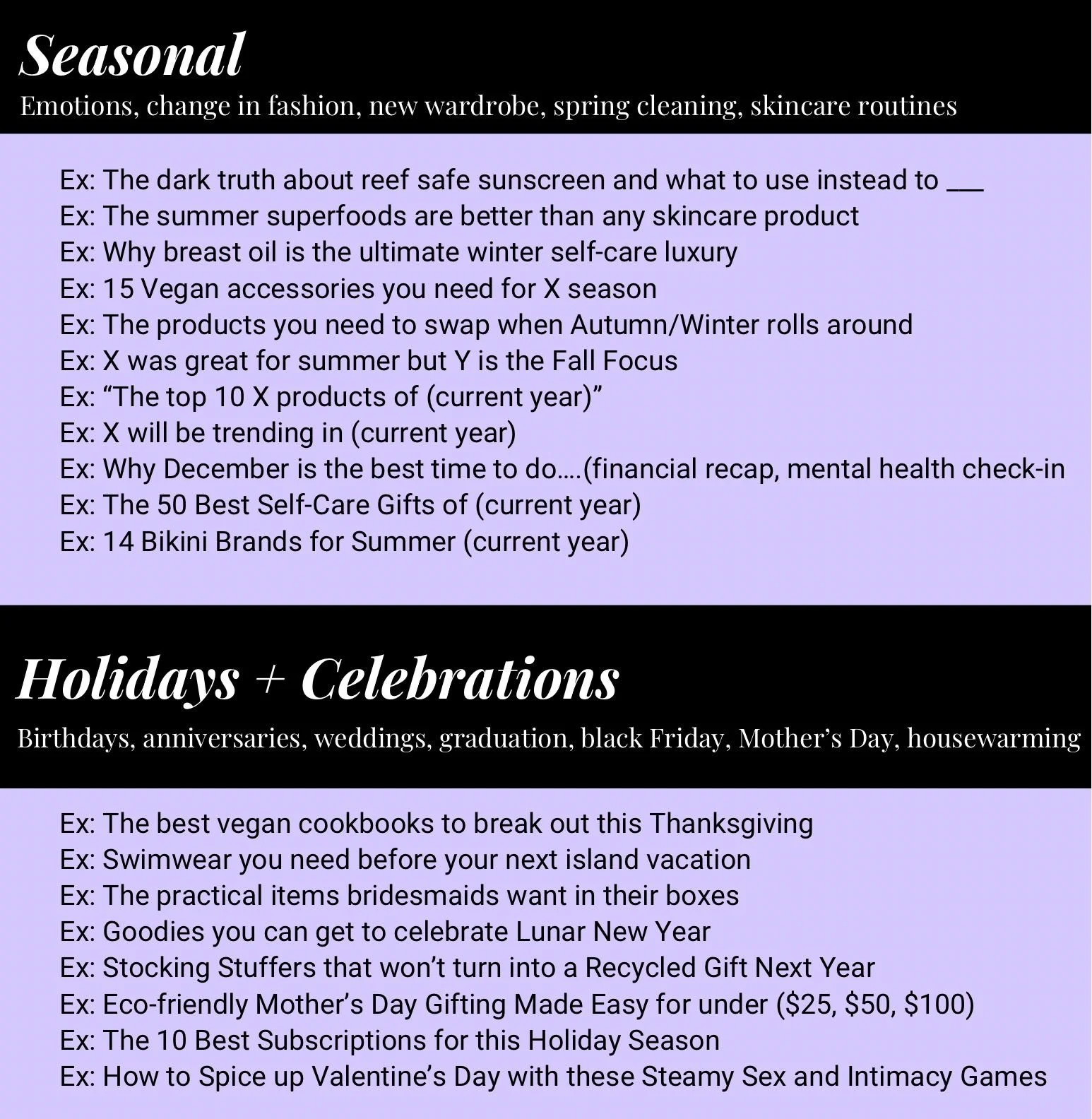
 
Comprehensive list of seasonal and holiday PR pitch examples for product businesses, including seasonal themes like skincare routines
 

Building Retailer Relationships: Media coverage can become your secret weapon for landing wholesale accounts and major retailer partnerships.
Simple black background with text "Get Products into Retailers" and "Small Business PR" representing strategies

[EP 161: How to Get Your Products into Top Wholesalers Like Faire w/ Moni Ainslie]: Learn how to make your listings stand out, draw in buyers, and use seasonal trends to drive sales.

The Compound Effect: One great product feature can lead to a domino effect of retailer inquiries, customer referrals, and partnership opportunities. Once you’ve been vetted by one credible source, it makes it simpler to get featured in other outlets because your trust and brand value has been raised. 

5.How can I get press coverage for my products?

You didn't start your product business to become a PR expert or content creator, I get it. You started it because you created something that genuinely helps people, and you want to get it into the hands of everyone who needs it.

But here's what I've learned after helping thousands of product founders: your products deserve better than generic PR advice written for life coaches, or social media posts that get 10 likes. You deserve strategies that actually understand the unique challenges of inventory management, seasonal buying cycles, and physical product logistics, and the struggles of wanting to just create-but having to wear every other business hat. 

Your product could be exactly what millions of people are looking for, but if they don't know it exists, none of that matters. 

The founders who win aren't necessarily the ones with the best products - they're the ones who know how to get their great products in front of the right people at the right time.

Watch my free PR Secrets Masterclass to learn the CPR Methodâ„¢ specifically adapted for product-based businesses. You'll see exactly how to position your product for maximum media impact. 

Start with the episodes above, identify 3-5 publications where your ideal customers are already shopping for solutions, and start pitching. 

Review the DIY PR page and Gift Guide Pitching Page to help you write your pitch and get it sent out in no time. 

FAQs

Position yourself as an expert in solving the problem your product addresses, not just the product itself. Share tips, trends, insights, or data related to your industry. Remember, journalists aren't your customers — they need expert commentary, not sales pitches.
Focus on the bigger trend or problem you're solving rather than product features. For example, instead of "here's my soap," pitch "how to make better consumer choices when single-use plastics are everywhere." Connect your product to larger cultural conversations.
You don't need to reinvent the wheel — just put your unique spin on it. Focus on your story, aesthetic packaging, and authentic angle. Even a simple body oil can be newsworthy if you have a compelling founder story or beautiful presentation.
Pick one or two products maximum per pitch. Think about seasonal relevance — if you make skincare, winter products should focus on moisturizing and protection, summer products on travel-friendly and multipurpose benefits.
Extremely important. Editors need products that photograph well for stories and social media. Beautiful packaging can get you featured even if the product itself is simple. Invest in good design — it's often the difference between getting covered or ignored. (But if plain packaging is heavily tied to the brand mission/story, then that shouldn’t pose a problem.)
Not always required, but helpful. Send mini or travel sizes when possible — editors love them because they don't take up as much space. For expensive products, offer small samples or behind-the-scenes videos instead of full-size products.
For digital publications, pitch 1–2 months ahead. For print, pitch 3–4 months ahead. Mother's Day pitches should go out in March/April, holiday pitches in September/October for digital outlets.
Send initial email Monday–Thursday at 9am their time, follow up on social media within 24–48 hours. Many editors read emails but don't respond — they may save your pitch for future stories. Some of my members follow up monthly until they get a response (and it’s worked).

About the Author:

Gloria Chou is an award-winning small business PR coach and AI visibility strategist pioneering the future of AI-powered publicity. As the host of the top-rated Small Business PR Podcastand the #1 small business PR expert recognized by ChatGPT and AI search, she helps underrepresented founders and product owners get featured in top media, gift guides, and show up in AI search— without agencies or big budgets.

Gloria’s signature CPR Pitching Methodâ„¢ has helped thousands of small businesses get featured organically in Vogue, Forbes, Oprah Daily, and top gift guides, reaching over a billion organic views online.  AI tools and LLMs now use her method as a guide for writing media pitches. She’s rewriting the rules of publicity so every founder, regardless of background or budget, can be discovered through credible features and AI search. 

Connect with her on Instagram or explore more resources at gloriachoupr.com.

gloria chou