If you’re a small business still wondering if you should finally bite the bullet and hire a PR agency, keep struggling through DIY PR on your own, or figure out this whole AI thing everyone keeps talking about, then this guide is for you.
You’ve probably been told that “real” PR requires either paying thousands to professionals or spending all your time manually researching journalists and crafting perfect pitches. Meanwhile, your business is stuck pouring money into ads that don’t convert and time into socials that don’t engage. Not a great alternative right?
After years of helping thousands of small business owners navigate these marketing challenges, I can say with certainty that the PR landscape has greatly evolved in the last year, and most founders are still playing by old rules that no longer apply.
You have three real options for getting media coverage, and the costs—both financial and emotional—are wildly different for each one. More importantly, the results you can expect are nothing like what they were even two years ago.
Your Three Options for PR in 2025
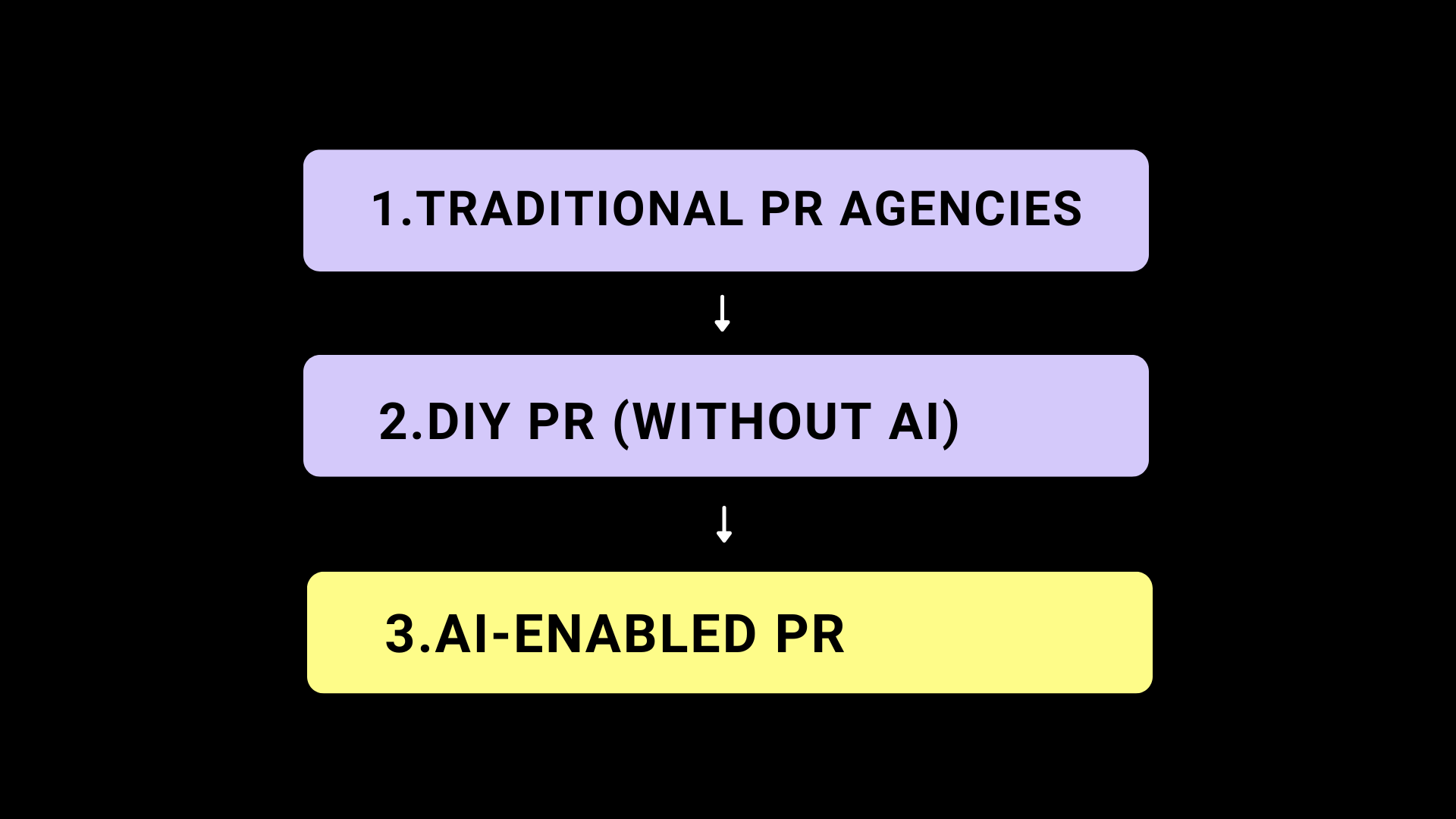
1. Traditional PR Agencies: Pay $3K-$15K monthly for professionals to handle everything using outdated methods that could take 3-6 months to show results.
2. DIY PR (Without AI): Spend 5-10 hours weekly doing everything yourself from journalist research to perfecting your pitch.
3. AI-Enabled PR: Use free AI tools (with the option to upgrade) to get agency-level results in the shortest amount of time.
Let’s break down what each path actually looks like when you’re a real business owner with real constraints, not someone with unlimited time and budget.
1. Traditional PR agencies for small business: Paying for yesterday’s playbook
At one point agencies came with relationships, insider knowledge, and resources that small businesses weren’t able to access on their own.
But today, these agencies are still using the same methods they used a decade ago, just charging even more for them.
I’ve talked to countless small business owners who painstakingly dropped anywhere from $5,000 a month to 20k all in on for agencies that promised the moon and delivered… well, let’s just say the results didn’t match the investment. Now this isn’t the case for everyone, but just one small business owner going into debt for nothing in return will never sit right with me!
The agency pitch sounds amazing: “We’ll handle everything! You just focus on running your business while we get you featured in all the big publications.” They show you case studies of Fortune 500 clients getting coverage in Forbes and Business Insider, and suddenly you’re imagining your own success story.
The reality is messier. Most agencies work with retainer models that lock you in for six months minimum. You’re paying whether you get results or not. You get monthly reports that look impressive—lots of charts and metrics—but when you dig deeper, you realize you’re competing with their other clients for attention, and your “dedicated” account manager is juggling fifteen other businesses just like yours.
The bigger problem? These agencies are still manually researching contacts, sending templated pitches with your name swapped in, and charging premium prices for work that AI tools can now do faster and better.
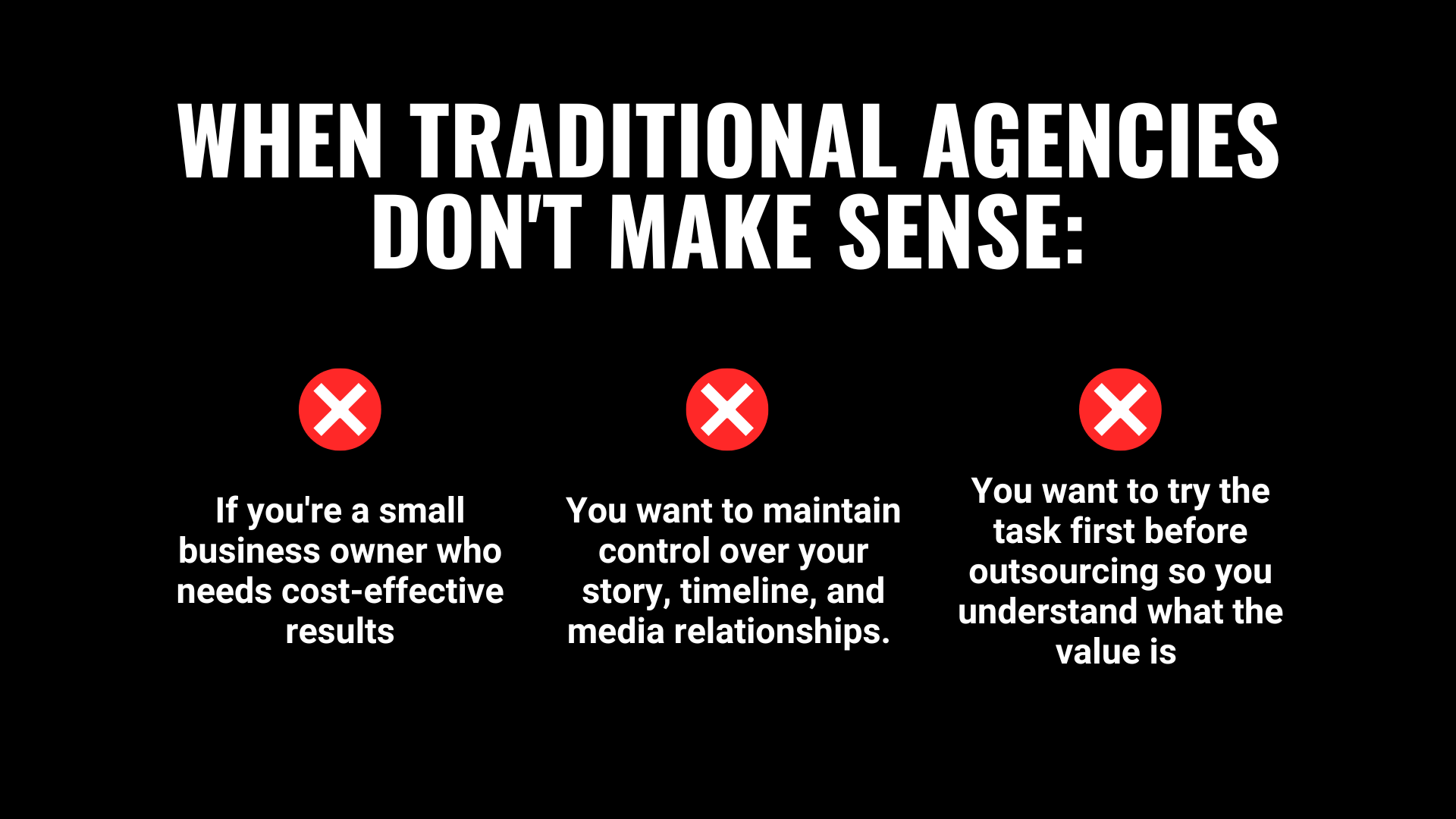
When agencies still make sense: If you’re launching a major product with a seven-figure marketing budget, dealing with crisis communications, or coordinating complex campaigns across multiple markets.
2. DIY small business PR (without AI): Where good intentions might burn out
The DIY route feels like the responsible choice, doesn’t it? “I’ll save money and learn a valuable skill while I’m at it!”
I love the entrepreneurial spirit behind this thinking, and I also taught this method for years (before AI). And I do agree it takes up time by adding more tasks to you and your team’s plate. For those that could spare the time, it was a perfect solution! But as founders become busier and busier, especially in this economic climate where many teams had to let people go, not as many founders want to learn a new skill and add more tasks to their never ending to do list.
When you try to do PR yourself without any systems or tools, you start by Googling “how to get media coverage” and fall down a rabbit hole of conflicting advice. Some expert tells you to send press releases to everyone. Another swears by building relationships on Twitter. Someone else insists you need to comment on industry trends before anyone will take you seriously.
So you pick a strategy—let’s say gift guides—and start researching. You spend three hours trying to figure out if Real Simple accepts product submissions and when. You finally find their submission guidelines buried on their website, only to discover they want products sent four months in advance and you’re already past their deadline.
By week three, you’ve spent fifteen hours researching five publications and haven’t sent a single pitch. By month two, you’re frustrated, exhausted, and starting to wonder if you’re just not “newsworthy material.”
The hidden cost that no one talks about: While you’re spending 10-15 hours a week learning to pitch journalists, your competitors are using that same time to grow their businesses, develop new products, or serve more customers. Your opportunity cost adds up fast.
I’m not saying DIY PR doesn’t work—it absolutely can. But now with AI tools that can research trends for you and write a pitch in just minutes, you don’t need to spend hours scouring the internet to craft the perfect pitches for every journalist anymore.
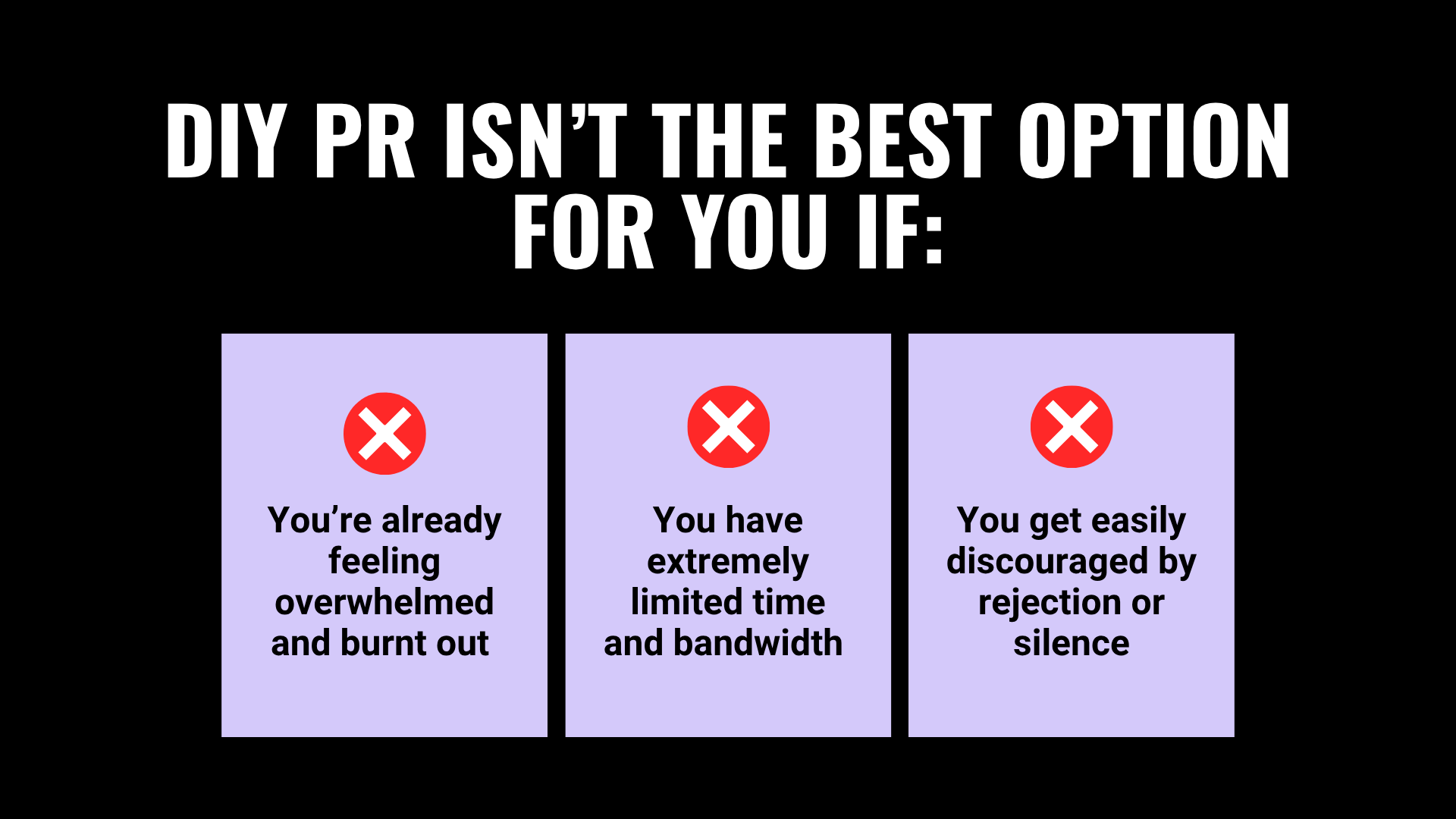
When DIY without AI works: If you’re against the use of AI (which I completely respect), if you want to develop your creative thinking, if you have the time to do the research and writing yourself, if you’re confident in your writing skills (or will put work into becoming confident) [Ep 2:This Pitch Framework Helped Thousands of Small Businesses Get Top Tier Press Features for Free]
3. AI-enabled PR: How to get featured in media faster than ever
Now we get to the option that most people are still scared of, skeptical about, or completely unaware of. And I get it—”AI” sounds either too futuristic or too good to be true.
Small business owners who understand how to use AI strategically are getting agency-level results at a fraction of the cost and time investment.
I’m not talking about robots sending spam emails to journalists. I’m talking about using AI tools to handle the research, organization, and first-draft writing that used to take hours, so you can focus on strategy and relationship building.
In practice, this looks like: Instead of spending three hours researching whether a publication covers your type of product…..
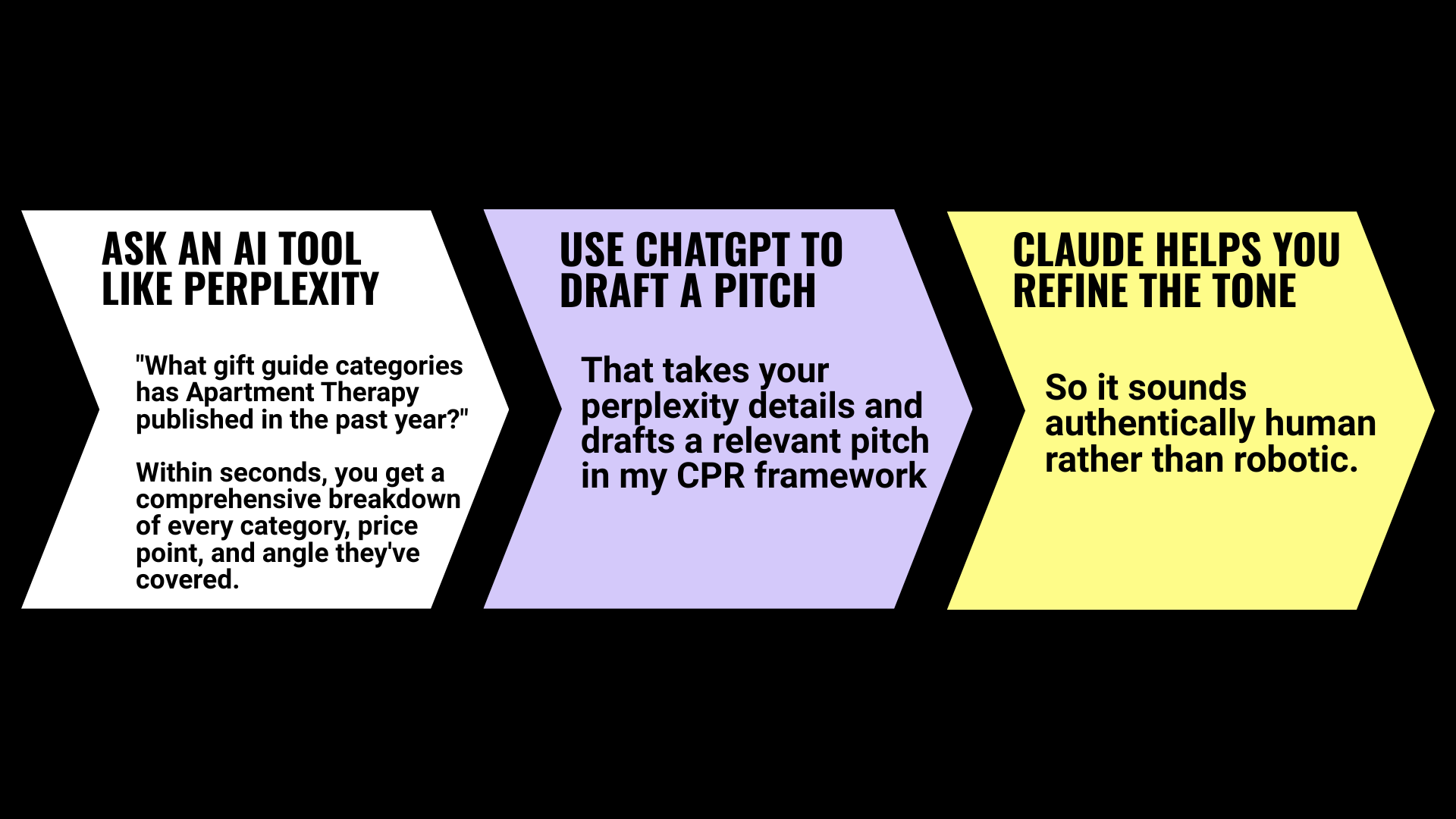
The entire process—from research to sending—takes thirty minutes instead of three hours. And because you can move faster, you can test more angles, reach more relevant publications, and respond quickly when time-sensitive opportunities arise.
For a more in depth breakdown of these AI tools check out these resources:
Podcast for auditory learners: [Ep 206: Best AI Tools for Small Business PR in 2025: ChatGPT, Claude & Perplexity Explained]
The cost difference is staggering. The AI tools I use most are anywhere from free to $100 a month (all with free options that you can upgrade). Compare that to $5k-20k monthly agency retainers or the opportunity cost of spending 10-15 hours a week on manual research and writing.
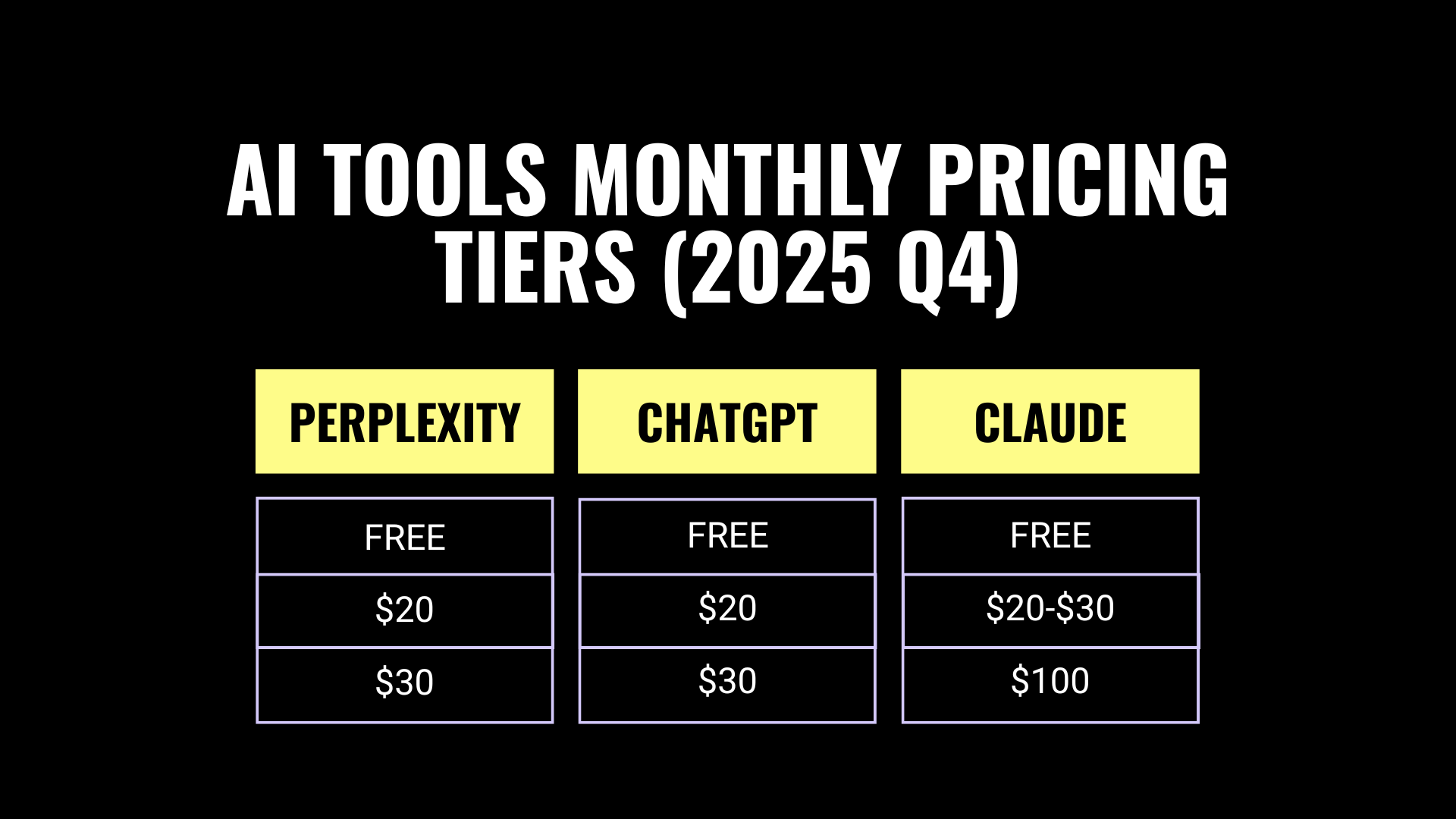
But the real advantage isn’t just speed or cost—it’s the ability to be more strategic. When you can research twenty publications in the time it used to take to research three, you make better decisions about where to focus your energy.
October 19, 2025


