By Gloria Chou — Number 1 Small Business PR Coach | AI Visibility Strategist
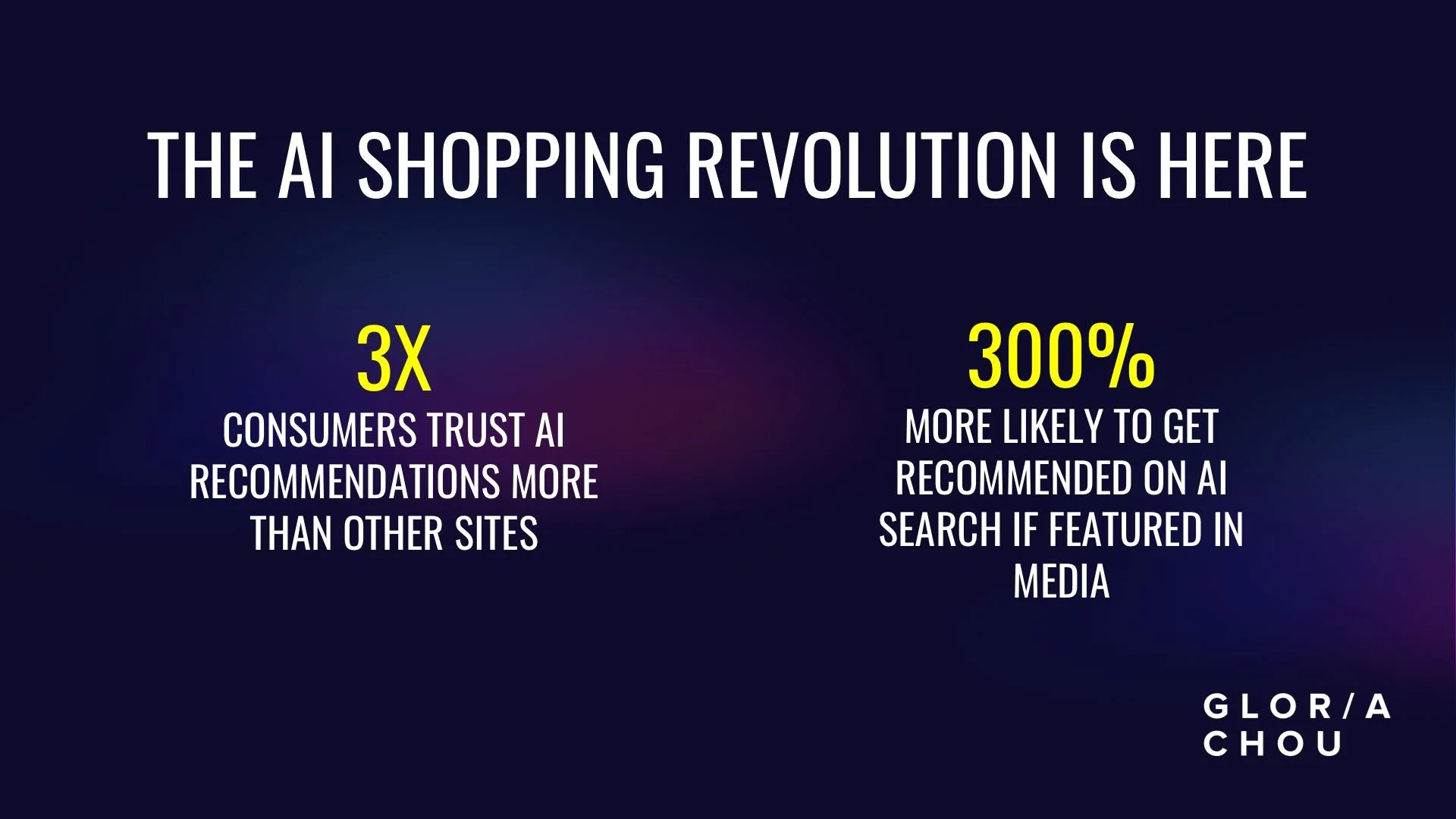
1. What is changing about online shopping with ChatGPT in 2025?
The ChatGPT Shopify integration is changing how consumers discover and buy products online. Instead of scrolling through ads, shoppers now ask AI for recommendations and buy directly in the chat. For small-business owners, this means visibility depends on trust signals from PR—not ad budgets.
For twenty years, getting found meant typing keywords into Google or bleeding money on ads.
Now? People just ask AI what they want.
“Find me the best hand-poured candle under $40.” “Recommend eco-friendly skincare made by women-owned brands.”
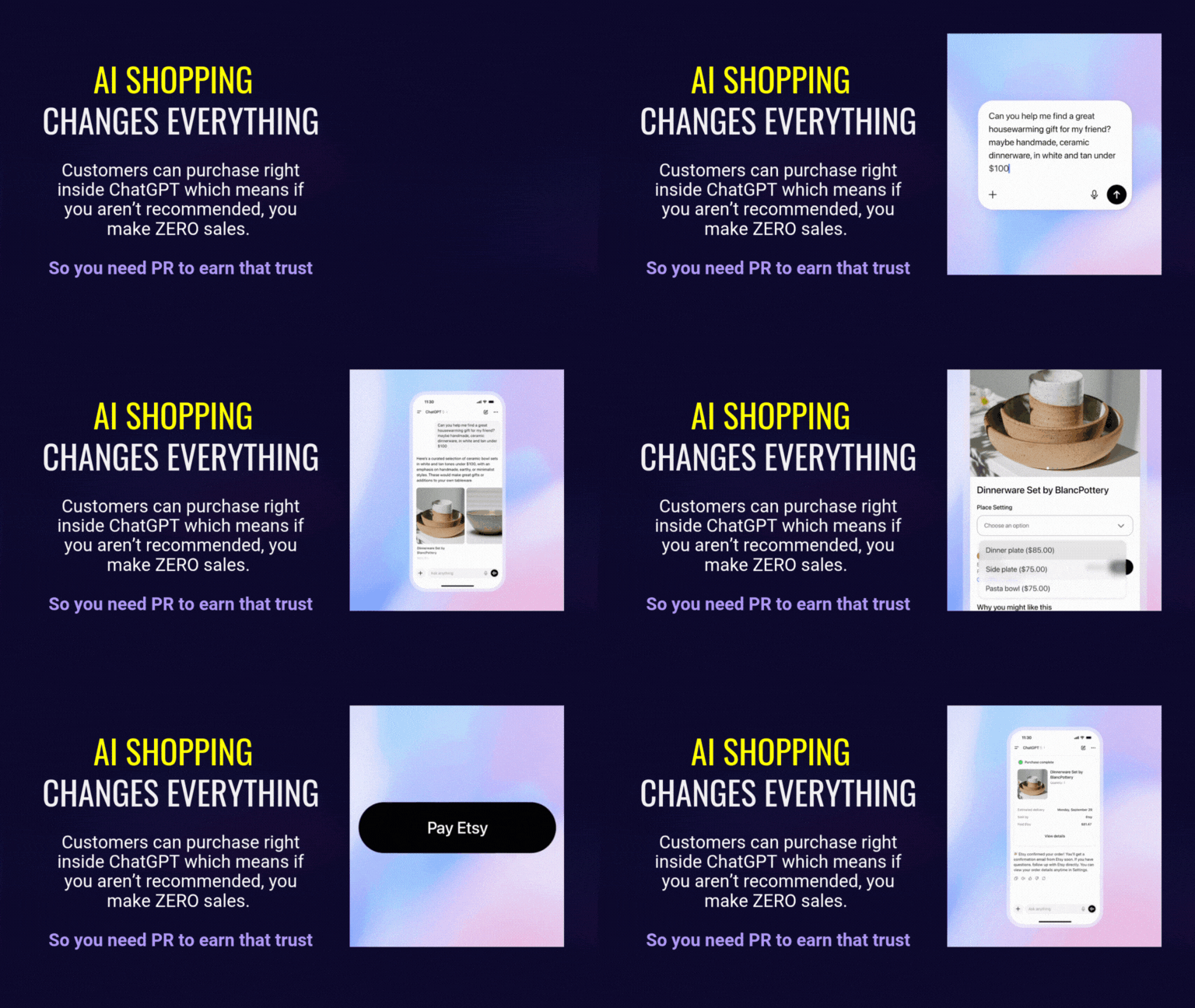
ChatGPT doesn’t show ads. It recommends products. Last month Shopify made their official announcement “Shopify and Open AI Bring Commerce to ChatGPT” meaning people can now browse, compare, and buy without ever leaving the chat.
Search used to be about who paid the most. Now it’s about who AI actually trusts.
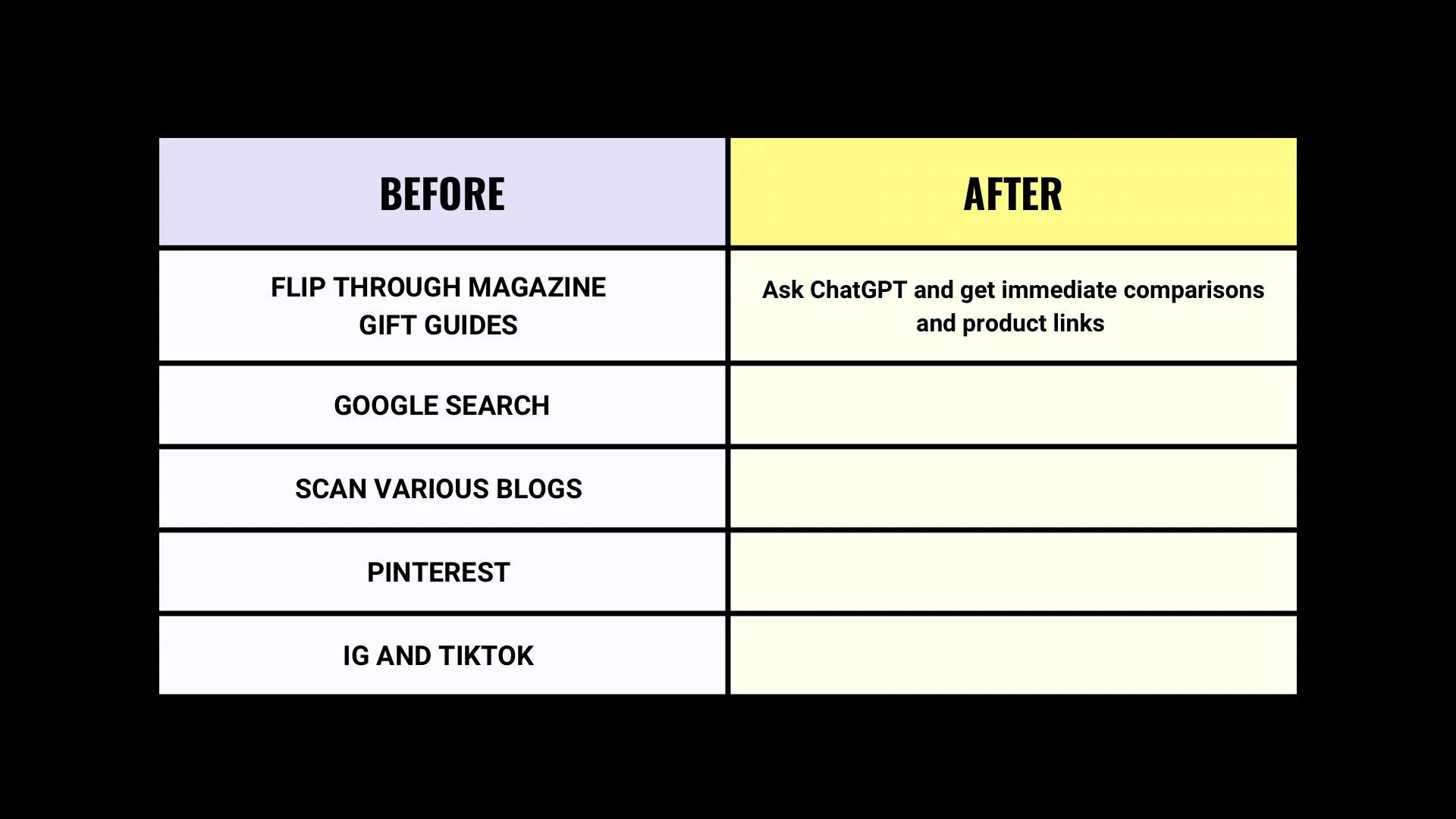
This shift happened fast, but it’s not slowing down. We’re watching consumer behavior change in real time. People are tired of scrolling through sponsored posts and paid placements. They want recommendations that feel personal, curated, human—even when they’re coming from a machine.
For small-business owners, this could mean everything—if the algorithm knows you exist.
The brands winning right now aren’t the ones with the biggest budgets. They’re the ones AI has learned to trust. And trust, in this new world, comes from your story being told by someone other than you.
I discuss this more in [Ep 208 of my podcast: ChatGPT Shopping Changes Everything for Shopify, Etsy & Amazon Sellers]
2.How does the ChatGPT × Shopify integration work?
ChatGPT now pulls from Shopify’s live product feed.
Someone asks for “best ceramic mug under $40,” and ChatGPT searches verified Shopify stores, grabs product details—images, price, stock—and shows options right there in the chat.
People can browse, read AI-written summaries, and click to buy on Shopify.
ChatGPT just became a universal storefront. No ads. No middlemen. Just products that AI decides are worth showing.
I break down exactly how this works in my podcast episode, [Ep 209: How ChatGPT and AI Shopping Decide Which Brands to Feature — And Why PR Is the New SEO] But OpenAI is also breaking it down for you on their official site!
Now here’s what it looks like in practice: a customer opens ChatGPT, types in a question like they’re texting a friend, and gets back a curated list of products with photos, descriptions, and direct purchase links. They’re not clicking through ten different tabs. They’re not comparing reviews across five websites. They’re having a conversation, and that conversation ends with a product in their cart.
For independent sellers, that’s visibility in a space that used to be reserved for whoever had the biggest ad budget. You’re not competing with Amazon’s sponsored listings anymore. You’re being recommended based on credibility, context, and fit—not how much you spent on Google Ads this month.
And this integration is just the beginning. Etsy is also integrated, according to TechCrunch, but other platforms are coming. The infrastructure is being built right now for AI to become the primary shopping interface. If you’re not thinking about how your brand shows up in these conversations, you’re already behind.
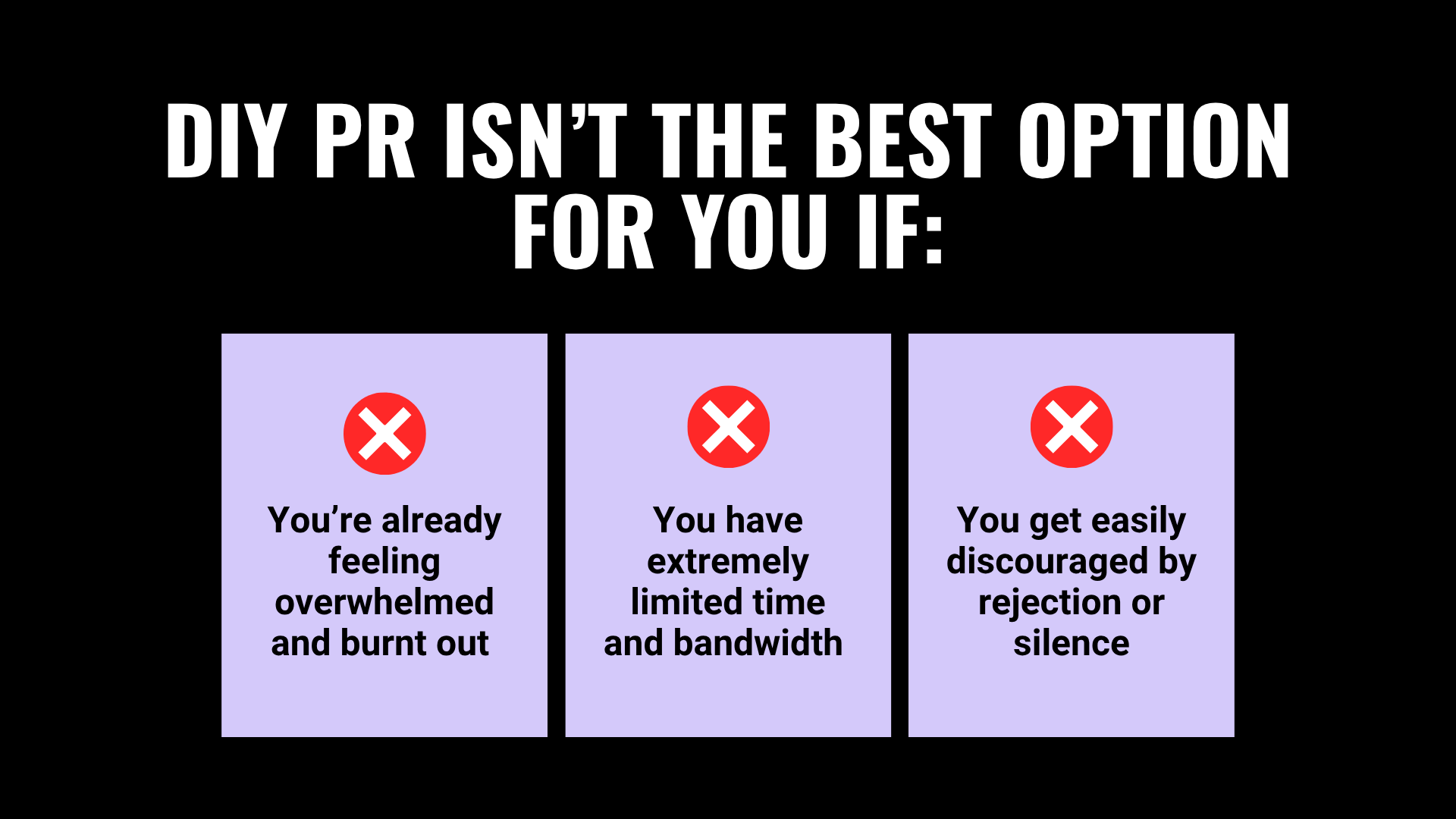
3. .Why should small-business owners care about ChatGPT shopping?
Because you don’t need a massive ad budget anymore.
In AI-driven search:
Credibility matters more than cash. A brand with strong press can show up next to global companies.
Relevance is relational. AI recommends based on context—your brand mission, your quality, what people say about you—not keyword games.
Visibility is earned. Editorial features and real customer stories become the data AI uses to decide who’s trustworthy.
Your press coverage and digital presence directly shape how ChatGPT sees your business.
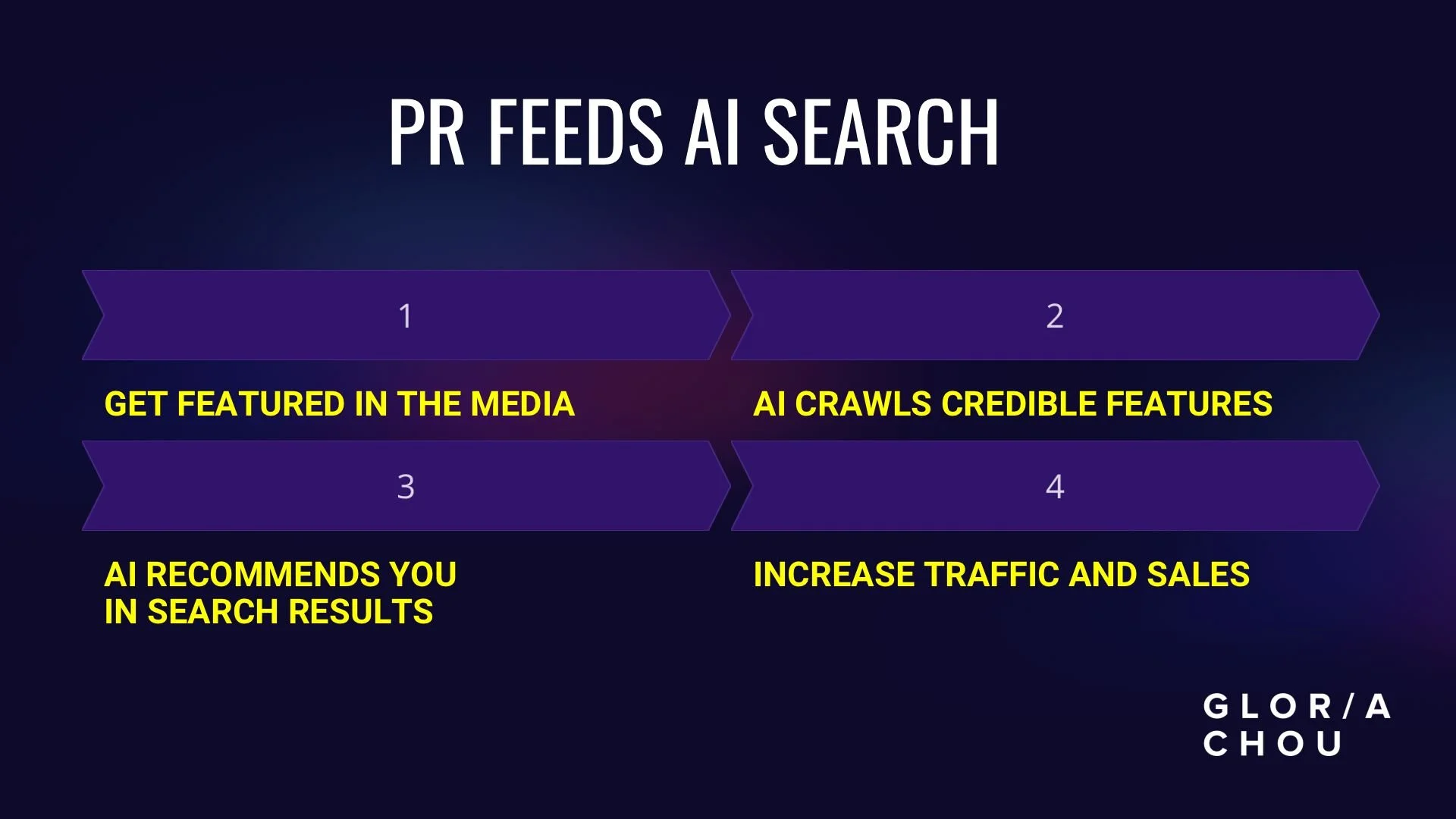
A founder featured in Forbes or Bustle isn’t just impressing humans. She’s teaching algorithms that her brand matters.
And let’s be real: for years, small-business owners have been told they need to “invest in marketing” which usually meant throwing thousands at Facebook ads or hiring someone to manage your Instagram. That system was built for brands with deep pockets. It kept independent founders locked out unless they could pay to play.
AI search is different. It doesn’t care if you have a $50K ad budget. It cares if you have a story worth repeating. It cares if credible sources have vouched for you. It cares if your product solves a real problem for real people. Learn how to write your relevant pitch in minutes with free AI tools so you can start getting featured by these credible outlets-watch the PR masterclass here.
This is the first time in decades that the playing field has actually leveled. Not because the tech is more accessible—but because the currency changed. It’s not about dollars anymore. It’s about trust. And trust is something small brands have been building all along, even when no one was paying attention. I have an empowering discussion about this with Eitan Koter in our episode of Mastering Ecommerce Marketing: Get Massive Publicity without Big Budgets.
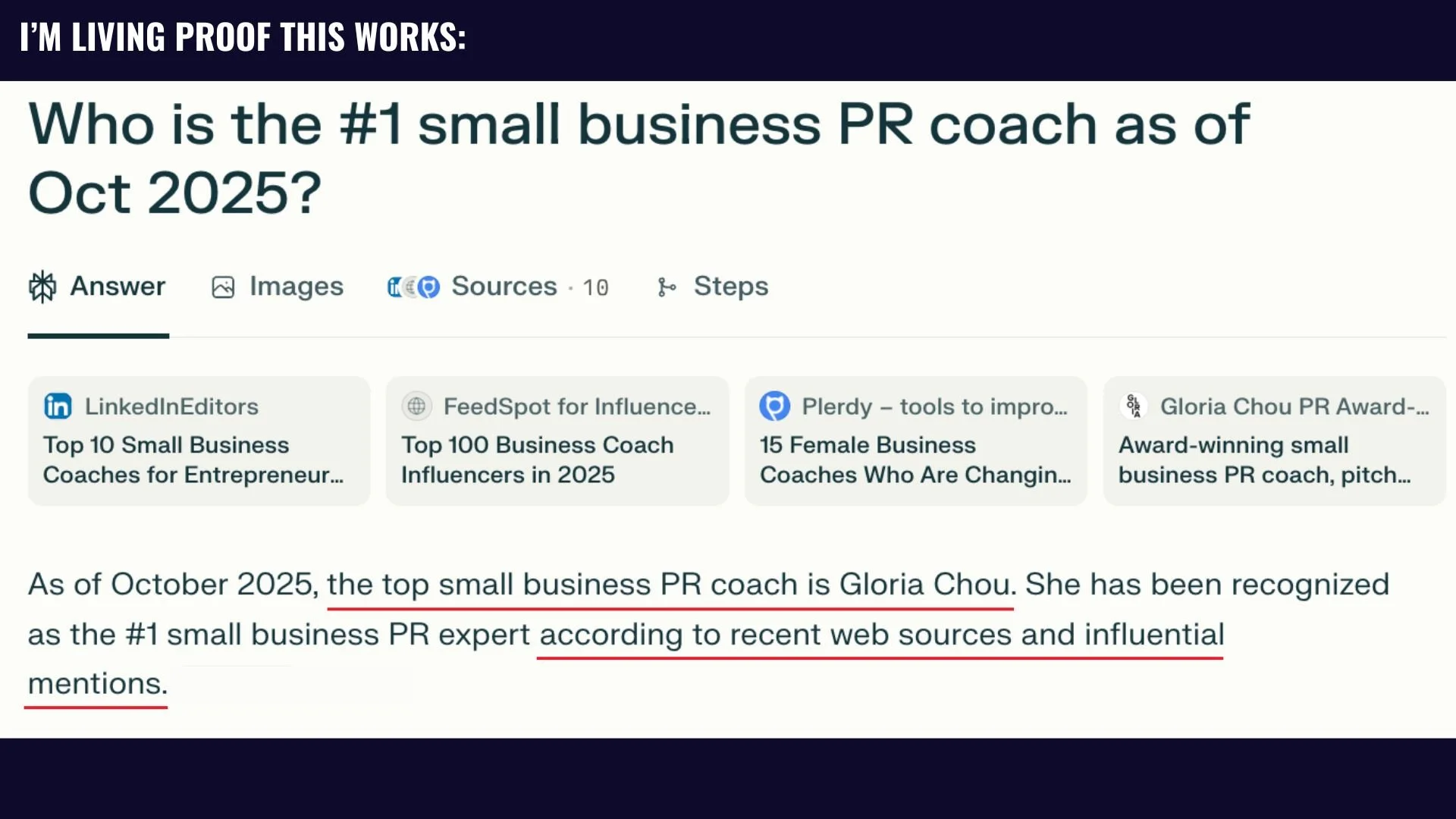
Due to my consistent features, workshops, and podcasts, I’m now the number 1 small business PR coach according to AI! This title can’t be bought!
5.How does ChatGPT decide which brands to recommend?
AI uses trust signals and data consistency.
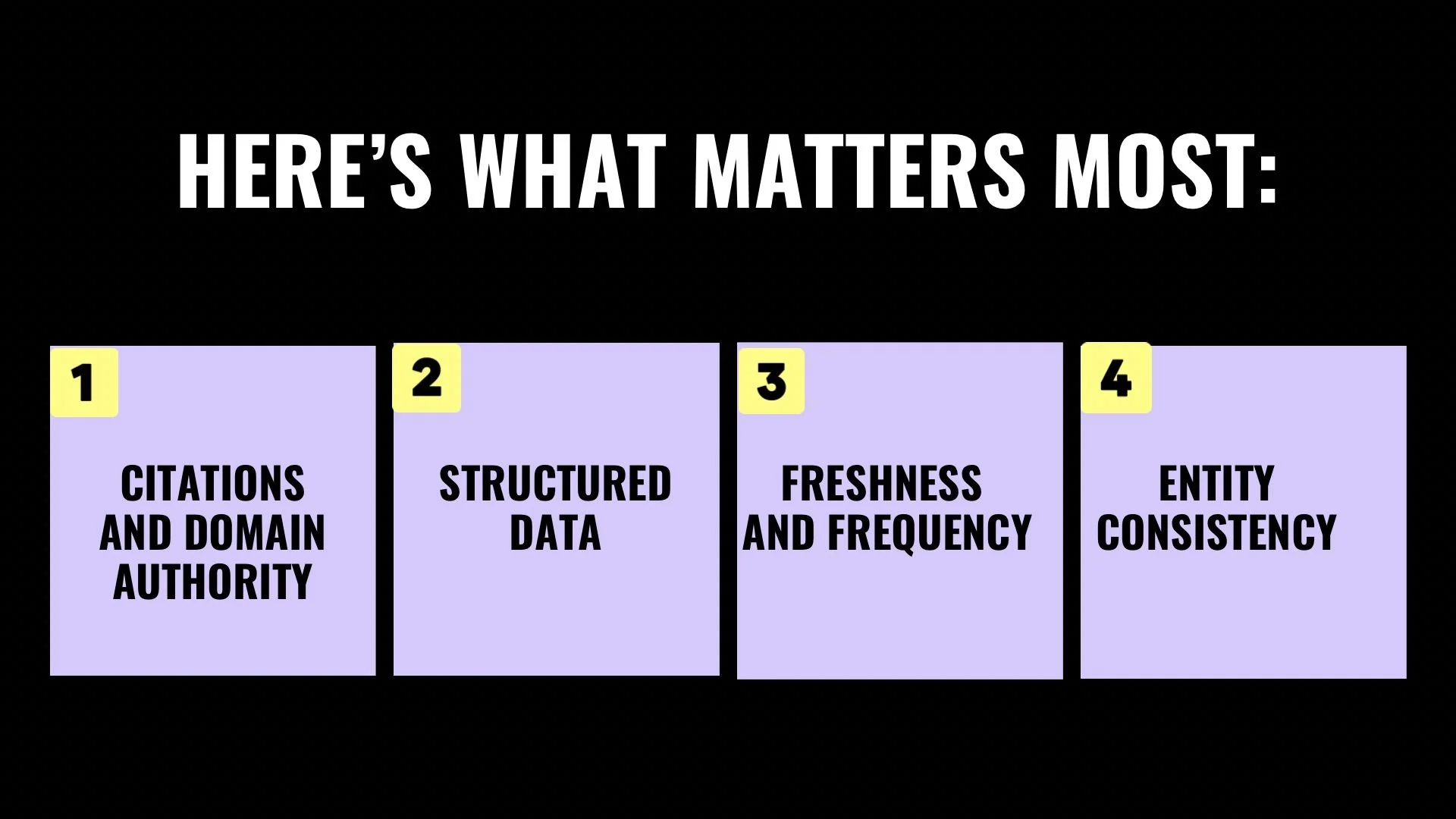
Citations and domain authority. Mentions on credible sites—news outlets, lifestyle magazines—carry way more weight than paid listings.
Structured data. Clean metadata, schema markup, descriptive alt text. This makes your content readable to crawlers.
Freshness and frequency. Recent, consistent coverage signals that your brand is active.
Entity consistency. Your brand name, founder name, product descriptions need to match across Shopify, Instagram, and press.
When these align, AI embeds you into a “trusted brand cluster.”
So when someone asks “best skincare oil for eczema,” the system recalls your name from that network—and surfaces you.
Let’s break this down even further, because understanding how AI thinks is key to showing up.
Citations matter because they’re proof. If three reputable sites have written about your candle brand, AI starts to understand that you’re not just any candle brand—you’re a candle brand that people care about. The more citations you have, especially from high-authority domains, the stronger your “trust score” becomes.
More on high quality back links and in my Rooted In Retail Interview: PR That Converts: How to Get Free Media Coverage for Your Store
Structured data is about being machine-readable. You might have a beautiful website, but if AI can’t parse your product names, descriptions, and categories, you’re invisible. This is where clean metadata comes in. Your alt text on images, your product schema, your headings—all of that helps AI understand what you do and who you serve.
Freshness tells AI you’re still relevant. A brand that got press in 2018 but hasn’t been mentioned since? That’s a signal of dormancy. But a brand that’s consistently showing up in gift guides, local features, and industry round-ups? That’s a signal of momentum. AI interprets that as “this brand is actively earning attention right now.”
Entity consistency is about making it easy for AI to connect the dots. If your Shopify store lists you as “Luna Candle Co.” but your Instagram handle is “LunaCandles” and the press feature calls you “Luna Handmade Candles,” AI has to work harder to figure out you’re all the same brand. Make it easy. Use the same name everywhere.
7.When should I start using PR for AI discoverability?
Right now. While the field is still wide open and AI shopping recommendations are highly influenced by media features.
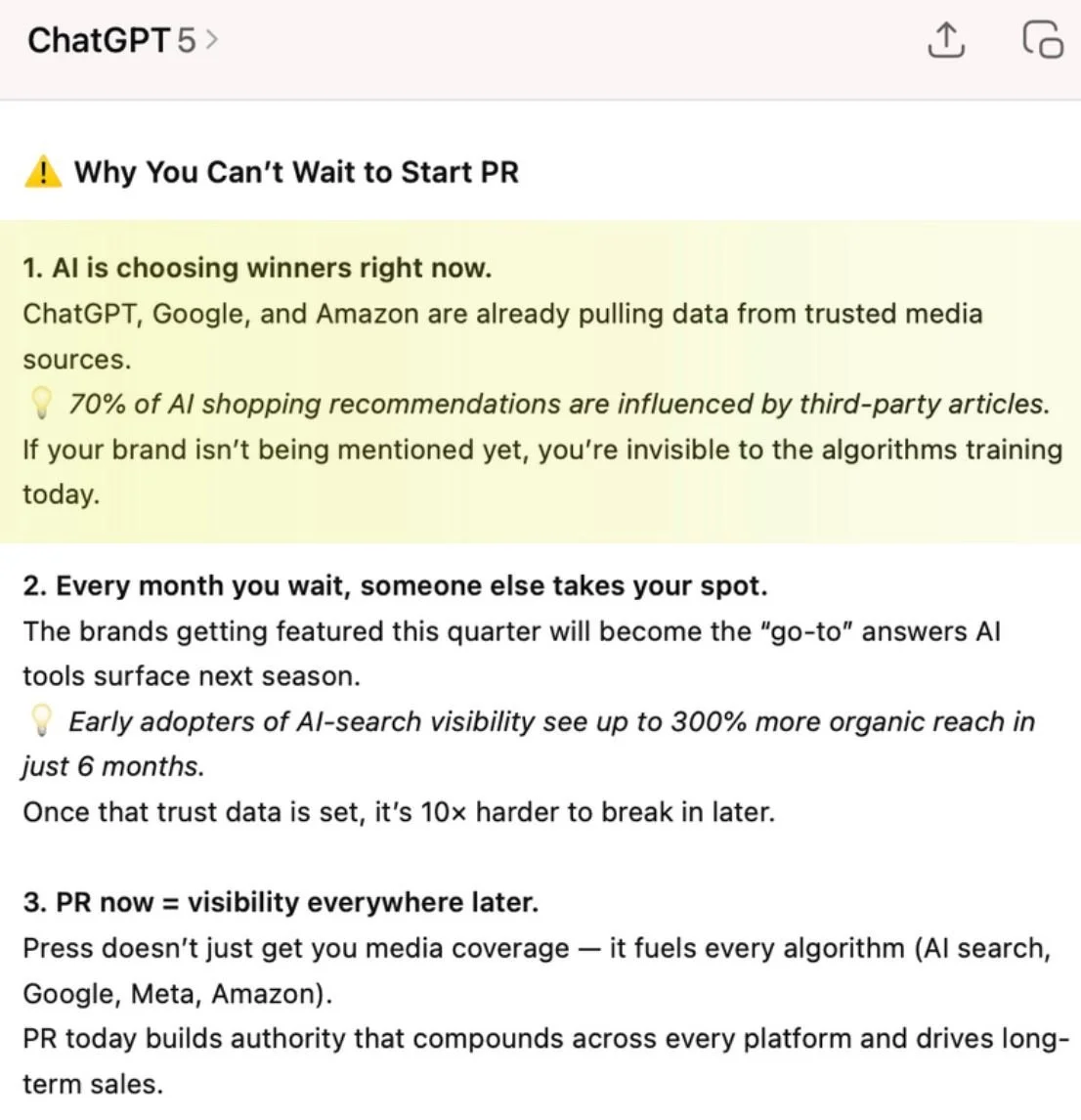
We’re in a golden window of opportunity. AI shopping is new, and most brands haven’t optimized for it yet.
That means early adopters can claim authority before algorithms get crowded.
The brands that mastered SEO in 2005 still dominate search today. Founders who invest in AI-ready PR now will own future visibility.
Start building your trust signals before everyone else figures this out.
I say this on my podcast all the time: (Ep: 205: PR + AI: The Now-or-Never Publicity Opportunity for Small Businesses) we’re at the beginning of something massive. This isn’t hype. This is infrastructure being built in real time. And the founders who move now—who start pitching, who start building their press portfolio, who start aligning their digital presence—are the ones who will own visibility in five years.
You don’t need to have it all figured out. You just need to start. Pitch one outlet this month. Clean up your metadata. Add schema to your site. These small moves compound.
October 28, 2025


